Publications

HamSCI at the 2016 Fall AGU Meeting

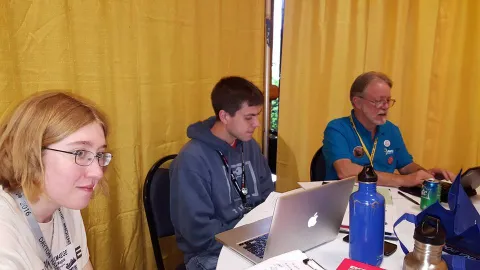
HamSCI scientists met at the Fall American Geophysical Union (AGU) meeting in San Francisco during the week of December 11–17, 2016. The Fall AGU meeting is one of the largest gatherings of geoscientists in the world, with approximately 24,000 people attending. During the meeting, HamSCI scientists presented ham radio-based research, discussed possibilities for upcoming experiments, and networked with members of both the Citizen Science and Space Science Communities.

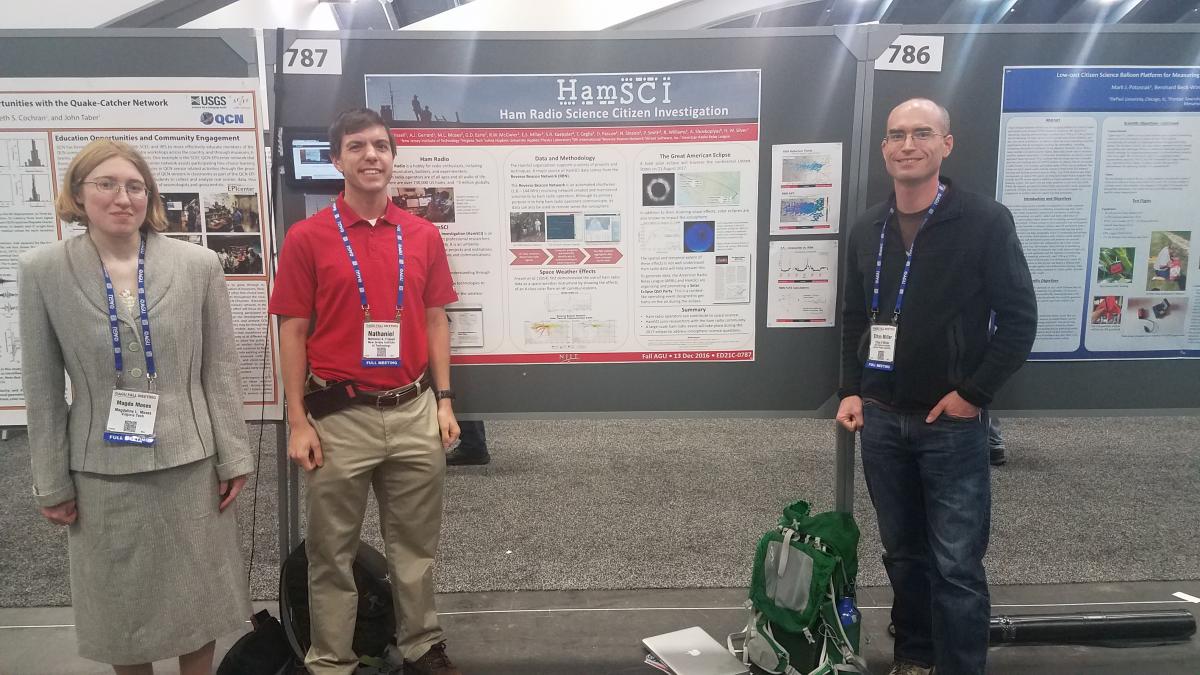
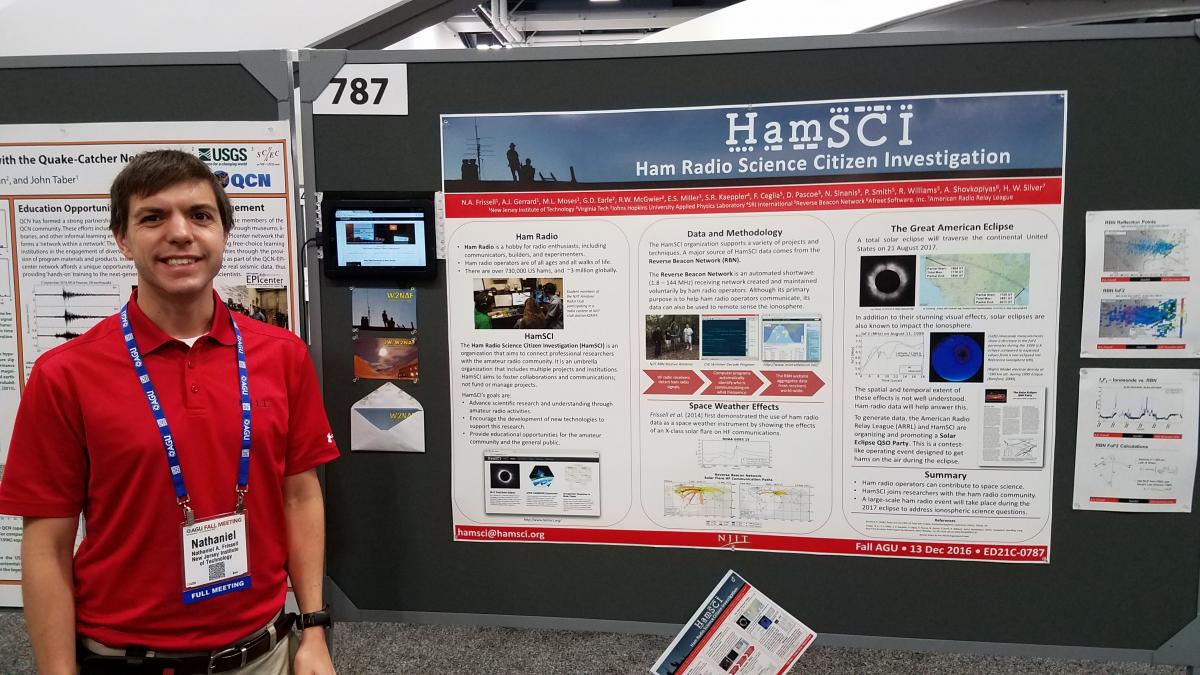
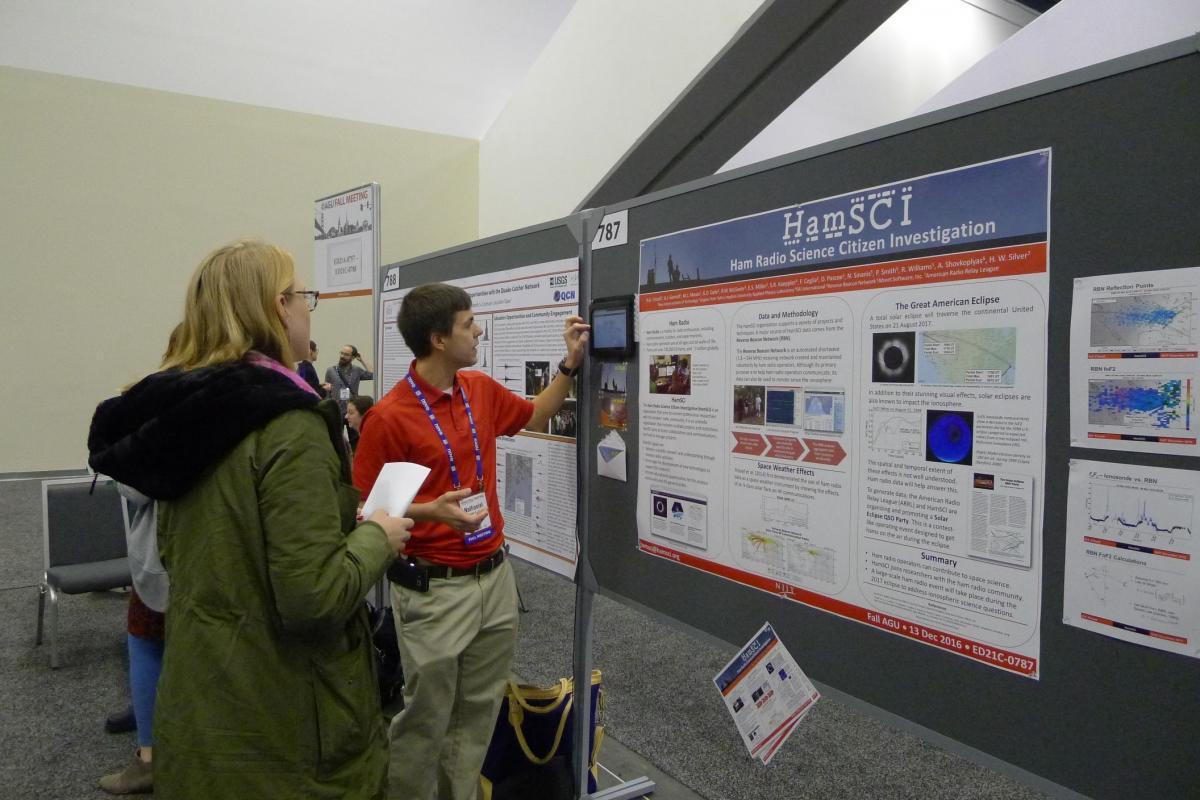
New Jersey Institute of Technology (NJIT) Post-Doc Nathaniel Frissell, W2NAF, presented “HamSCI: The Ham Radio Science Citizen Investigation” in the education/outreach session Citizen Science with Big Data: Intersection of Outreach, Crowd-Sourced Data, and Scientific Research. Dr. Frissell’s presentation described the ham radio hobby and the three objectives of HamSCI: (1) advance scientific research and understanding through amateur radio activities (2) encourage the development of new technologies to support this research, and (3) provide educational opportunities for the amateur community and the general public. Frissell showed ways that the Reverse Beacon Network can be used as a scientific instrument and also discussed the upcoming Solar Eclipse QSO Party (SEQP).

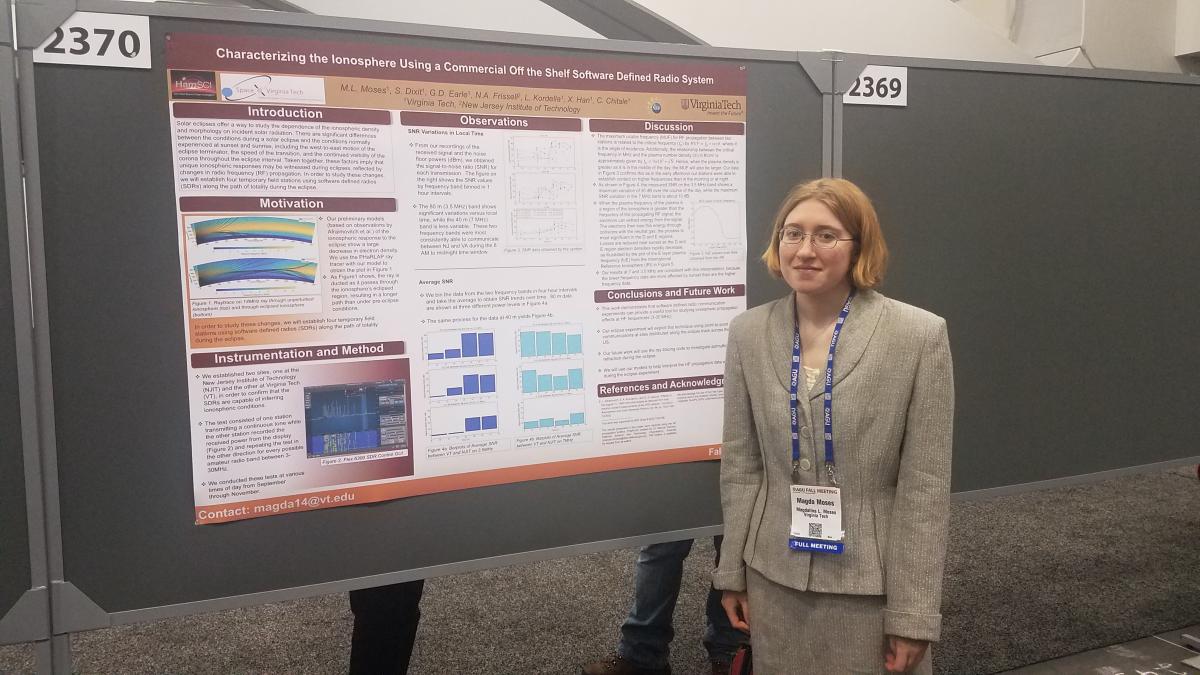
Virginia Tech (VT) Undergraduate Researcher Magda Moses, KM4EGE, presented “Characterizing the Ionosphere Using a Commercial Off the Shelf Software Defined Radio System” in the Developing Critical Measurement Strategies in Ionosphere/Thermosphere/Mesosphere Research: Ideas and Priorities session. Moses ran propagation experiments between Blacksburg, VA and Newark, NJ using Flex 6300 radios. This was done to help understand ways of using high frequency (HF) links to characterize the ionosphere during the 2017 Total Solar Eclipse. Moses first presented ray trace diagrams through an eclipsed ionosphere, and then used propagation test data to show that the 80 meter ham band was most useful for identifying diurnal (day-night) variations along the Blacksburg-Newark propagation path.

A general HamSCI meeting was held on Tuesday afternoon, with eight members in attendance. Members talked about rules for the upcoming Solar Eclipse QSO Party, installation of additional Reverse Beacon Network receivers, use of data from other networks such as WSPRNet, the design of better measurement techniques, and possibilities for future HamSCI experiments. Plans for the Dayton 2017 Hamvention were also discussed. This includes a display table and the program for a 90 minute ARRL-sponsored forum.

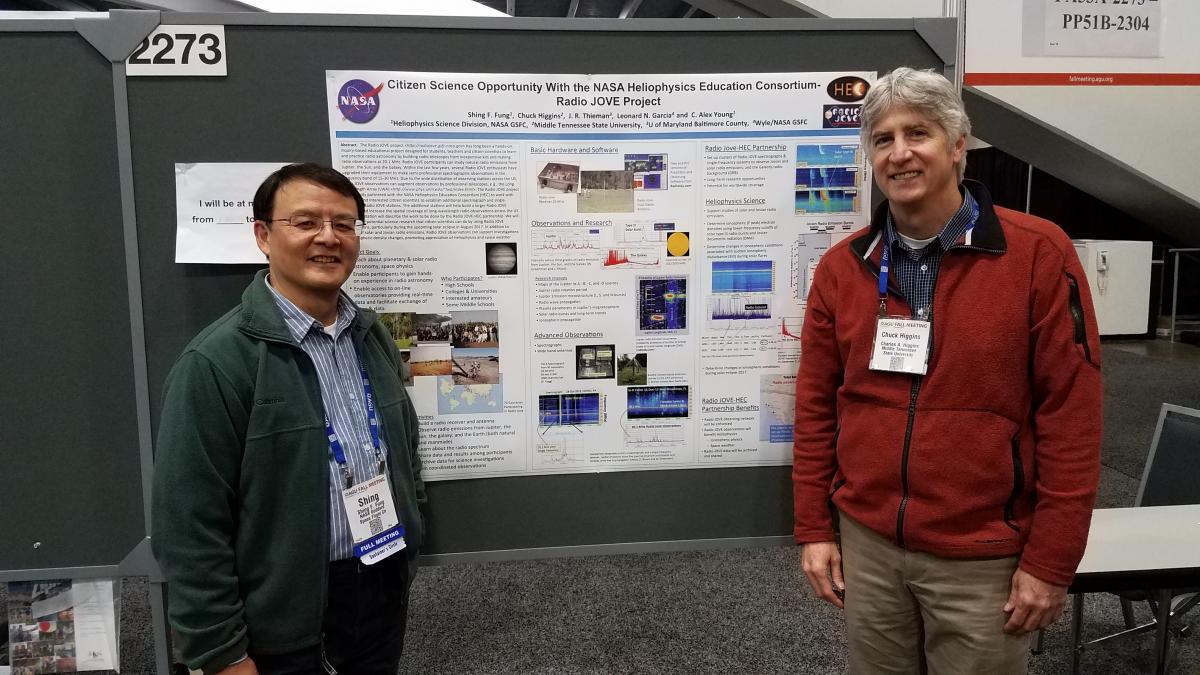
The Fall AGU meeting also offered many opportunities to network with other scientists and projects. HamSCI members Nathaniel Frissell and Magda Moses attended the Solar Eclipse Citizen Science Meeting of Opportunity, where they met with NASA Heliophysics Science Division Associate Director Dr. Alex Young, as well as Rice University Professor and AGU Fellow Dr. Patricia Reiff, W5TAR. Dr. Reiff has been incorporating amateur radio into her university teaching for many years with a masters-level course PHYS 501: Physics of Ham Radio. HamSCI also met with Dr. Shing Fung and Dr. Chuck Higgins of the Radio Jove project, as well as with Dr. Elizabeth MacDonald and Dr. Burcu Kosar of the Aurorasaurus project. HamSCI looks forward to strong collaborations with these citizen science projects in the future.

The 2016 Fall AGU meeting has been extremely important for presenting HamSCI’s work and strengthening ties with both the Space Science and Citizen Science communities. In the upcoming months, HamSCI will be most focused on preparing for the 2017 Total Solar Eclipse. An introductory Solar Eclipse QSO Party article is scheduled to be published in the February 2017 issue of QST. Final SEQP rules will be available no later than the May 2017 Dayton Hamvention.


HamSCI Meetup at 2016 Fall AGU
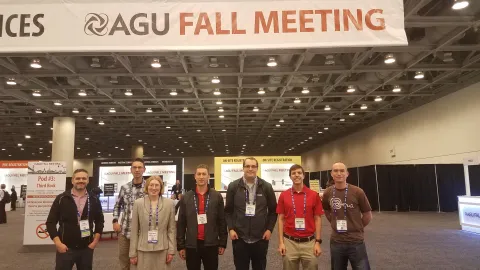
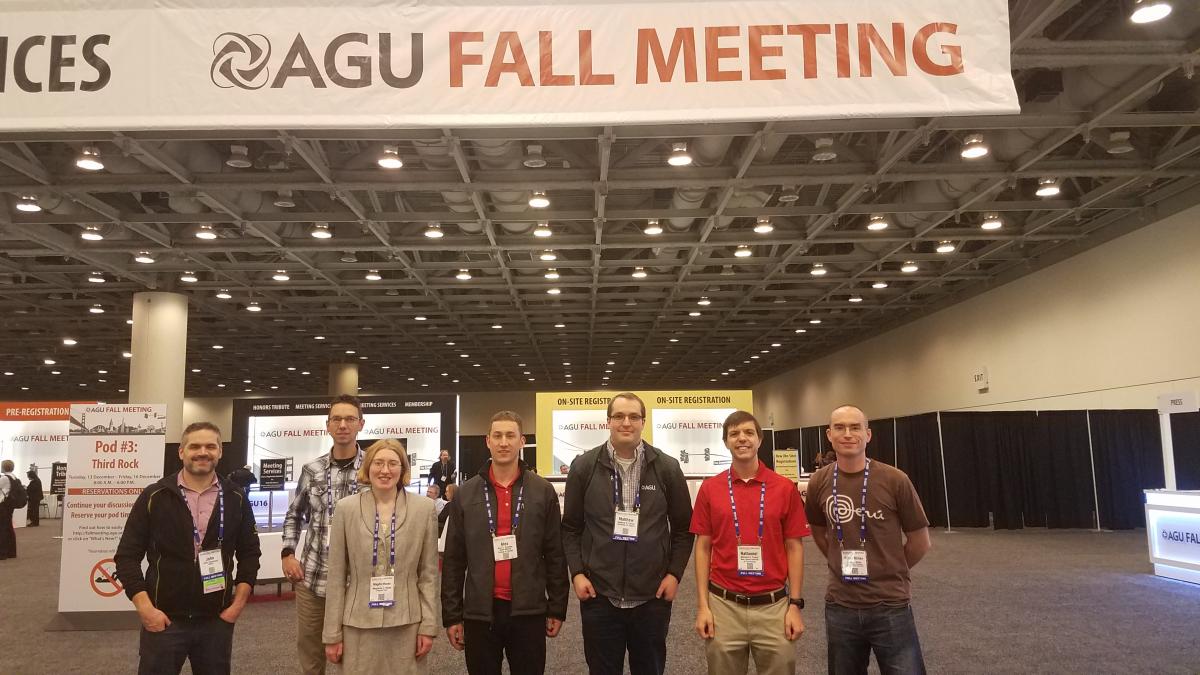
HamSCI meetup at 2016 Fall AGU Meeting:
John Thurmond, K5JBT, Tom Rune Lauknes, LA5VK, Magda Moses, KM4EGE,
Alex Cushley, VA3CUS, Matthew Patrick, VE6AZX, Nathaniel Frissell, W2NAF, and Ethan Miller, K8GU
 
Magda Moses, KM4EGE, Nathaniel Frissell, W2NAF, and Ethan Miller, K8GU at the HamSCI Poster
 
Nathaniel Frissell, W2NAF at the HamSCI Poster
 
Nathaniel Frissell, W2NAF, Presenting the HamSCI Poster
 
Magda Moses, KM4EGE, presenting "Characterizing the Ionosphere Using a Commercial Off the Shelf Software Defined Radio System"
 
Shing Fung and Chuck Higgens presenting on Radio Jove

New RBN Receivers in New Jersey

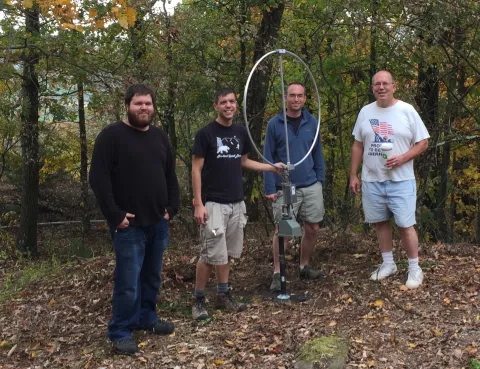
On October 19 – 20, 2016, two new Reverse Beacon Network (RBN) receivers were installed at the United Astronomy Clubs of New Jersey (UACNJ) Observatory at Jenny Jump State Park in Hope, NJ. These receivers, assigned call signs K2MFF-2 and K2MFF-3, are sponsored by the New Jersey Institute of Technology Center for Solar-Terrestrial Research (NJIT-CSTR). These receivers will listen for amateur radio Morse Code signals on the high frequency (HF, 1.8–30 MHz) bands and report “spots” back to the main RBN web site. These spots will be used by ham radio operators to find other hams to communicate with, and by scientists to study shortwave propagation and the ionosphere.

The Jenny Jump RBN site will serve as both a routinely operating RBN receive node, as well as a engineering test facility to experiment with different configurations of antennas and receivers. In its initial configuration, two different antennas connected to identical receive hardware are being operated in parallel. K2MFF-2 is connected to a DX Engineering DXE ARAV3-1P active vertical, while K2MFF-3 is attached to a DX Engineering DXE RF-PRO-1B active magentic loop. For receivers, both systems use Red Pitaya FPGA development boards running software written by Pavel Demin that emulates a Hermes Software Defined Radio. Each receiver simultaneously covers six CW bands: 1.8 MHz (160 m), 3.5 MHz (80 m), 7 MHz (40 m), 14 MHz (20 m), 21 MHz (15 m), and 28 MHz (10 m).

These receivers were installed by a team consisting of people from NJIT, UACNJ, and John Hopkins Applied Physics Laboratory (JHU/APL). Team members include Nathaniel Frissell (W2NAF, NJIT, Team Lead), Gil Jeffer (NJIT and UACNJ), Ethan Miller (K8GU, JHU/APL), Chris Callie (UACNJ), Hyomin Kim (KD2MCR, NJIT), Tom Lobay (KC2TAL, NJIT), Chris Harrsch (KD2GYD, NJIT), Nick Zito (KD2MCS, NJIT), and Josh Katz (KD2JAO, NJIT).

To make the RBN a more useful to both scientists and radio amateurs, more receive nodes are needed. If you are interested in operating your own RBN node, consider the following equipment and software list:

If you have questions, consider joining the Skimmer Talk or RBN Ops listservs.


ARRL Frequency Measurement Test

The November Frequency Measuring Test will begin at 0000 UTC, November 3 (8:00 PM EDT November 2).  Transmissions will take place on three bands: 20, 40, and 80 meters. The 20 meter transmission will have two parts - the first beaming east from California and the second beaming toward Japan. Participants are to submit only one 20 meter measurement, but are encouraged to measure both transmissions and compare the measured frequency and signal characteristics in their comments.

The object is to obtain accurate frequency measurements of an unmodulated carrier on three amateur bands (20-40-80 meters) accounting for Doppler shift, fading, multi-path and other interesting phenomena.  The FMT has attracted quite a following, and all of the measurement submission and reporting are done online for quick results.

More information is available:


2017 IEEE AP-S Student Design Contest

The IEEE Antennas and Propagation Society (AP-S) has announced the 8th IEEE AP-S Antenna Design Contest for undergraduate and graduate students. The goal for teams: "Design and build a cubesat antenna for enabling high-performance communications with a ground station." The antenna design must meet a number of specifications including VHF, UHF, S-band, X-band, and Ku-band coverage as well as compatibility with a 3U cubesat among others.

The contest will extend from fall to spring with preliminary design proposals due by November 28, 2016. From the submitted proposals, reviewers will select the teams for the semi-finals. These semi-finalist teams shall receive $1500 to construct and test their design before their final report on March 31, 2017. The six finalist teams will be awarded a stipend to travel and present their work at the IEEE AP-S Symposium. At the conclusion of the symposium, the judges will announce the contest winners. There will be awards for the top three teams and all of the six finalist teams may submit their final project reports for possible publication in the IEEE AP Magazine.

More information on the contest may be found at the IEEE AP-S Antenna Design Contest website: http://2017apsursi.org/StudentDesignContest.asp

Joining the Reverse Beacon Network

Tags: RBN, QST, ARRL

In “The Reverse Beacon Network” (Oct. 2016 QST, pp. 30-32), Pete Smith, N4ZR, and Ward Silver, N0AX explain how the Reverse Beacon Network (RBN) is used to observe and report both CW and RTTY communications to the DX spotting network and to a data archive. This article explains how to be spotted by the RBN, how to download RBN data, and also how to become an RBN receiving node. HamSCI is encouraging amateur radio operators to become RBN receivers, as this will provide useful data to DXers, contesters, and scientists alike. More information can be found at the Reverse Beacon Network website. Those interested in becoming RBN node operators are also encouraged to join the SkimmerTalk listserv.

New Sunspot Number Calculation

In “The New Sunspot Numbers” (Oct. 2016 QST, pp. 38-41), Carl Luetzelschwab, K9LA, reviews the history of sunspot numbers and how they are calculated, as well as explains a new formulation of sunspot numbers in use by the Royal Observatory of Belgium. Sunspot numbers are important because they are correlated with the atmospheric ionization on Earth. The sunspot number is used in propagation calculations and to study long-term trends in solar activity. When using sunspot numbers for such calculations, it is important to understand which version index is the correct one for your application.

HamSCI Featured in QST

Tags: QST, ARRL

In an article by Ward Silver, N0AX, the American Radio Relay League has featured HamSCI in the August 2016 (Pages 68-71) issue of QST.  Ward's article discusses some history of amateur radio involvement in science, the vision of HamSCI, and a description of ham radio activities for the 2017 Total Solar EclipseDownload a free PDF of the full article here.

In addition, the August 2016 QST inlcudes a full-page profile of HamSCI member Magda Moses, KM4EGE (Page 13). Congratulations, Magda!

HamSCI Eclipse Team Meets in Dayton

Researchers and HamSCI volunteers meet at the 2016 Dayton Hamvention to plan the 2017 Solar Eclipse QSO Party. (Left to Right) Magda Moses KM4EGE, Nathaniel Frissell W2NAF, Ward Silver N0AX. Photo by Bob McGwier N4HY.


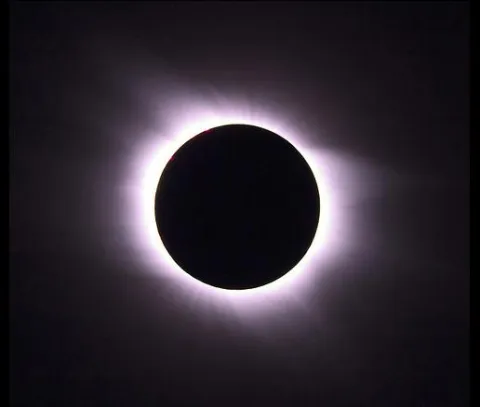
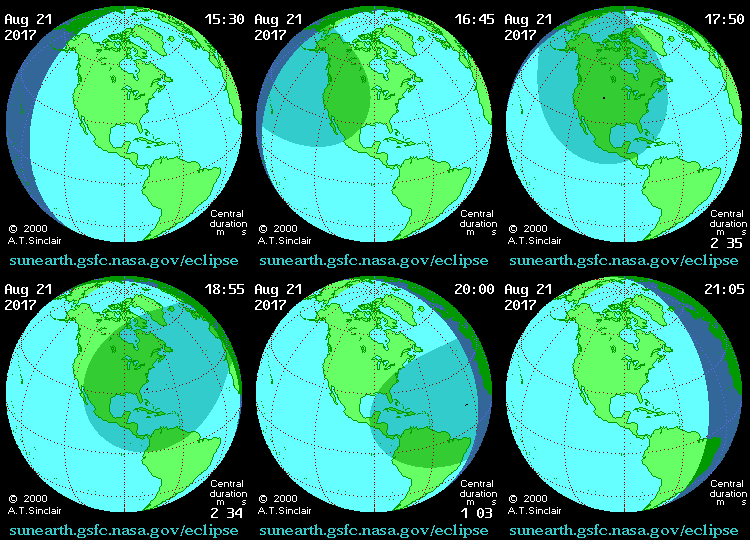
Members of the HamSCI Eclipse team met at the 2016 Dayton Hamvention to discuss upcoming activities and experiments pertaining to the 2017 US Total Solar Eclipse. This total solar eclipse will take place on August 21, 2017, with totality beginning in Oregon, traversing southeastward, then leaving the United States in South Carolina.  The lunar shadow is expected to have a dramatic effect on ionospheric conditions and HF propagation. HamSCI researchers are looking to understand the spatial and temporal effects of the eclipse on the ionosphere.

On Saturday afternoon, Researchers from Virginia Tech and the New Jersey Institute of Technology met with ARRL contributing members to plan the 2017 Solar Eclipse QSO Party (SEQP). The SEQP will be a contest-like operating event designed to generate substantial activity across the high frequency amateur radio bands in the hours before, during, and after the total solar eclipse. After the event, QSO Party Logs, recordings, and Reverse Beacon Network spots will be used to address target science questions. Once finalized, official SEQP rules will be published here and in QST.

The study of the ionospheric effects of the 2017 Total Solar Eclipse is in part made possible through a National Science Foundation grant, led by principal investigator Virginia Tech Professor Gregory Earle, W4GDE.

2016 Dayton SEQP Planning Team:

  • Nathaniel Frissell, W2NAF (New Jersey Institute of Technology)
  • Bob McGwier, N4HY (Virginia Tech)
  • Magda Moses, KM4EGE (Virginia Tech)
  • Xiaoyu (Harry) Han, KM4ICI (Virginia Tech)
  • Ward Silver, N0AX (ARRL Contributing Member)
  • Carl Luetzelschwab, K9LA (ARRL Contributing Member)
  • Vicki Luetzelschwab, AE9YL (ARRL Contributing Member)
  • Sam Rose, KC2LRC (ARRL Contributing Member)


Joining the RBN

There are several ways to set up an RBN node as well as several types of stations.  In addition, there are some station configurations that facilitate the use of the RBN for scientific studies. Here, we will go over the basic components that go into an RBN node, different options available,

What goes into a RBN station?

The core components of an RBN station are :

  • Software
  • Computer
  • Radio
  • Antenna

The overall operation of a station

Software


The software is what turns the RBN from isolated receivers into a worldwide network. It is also the most standard component of the RBN.

Radio

RBN Overview

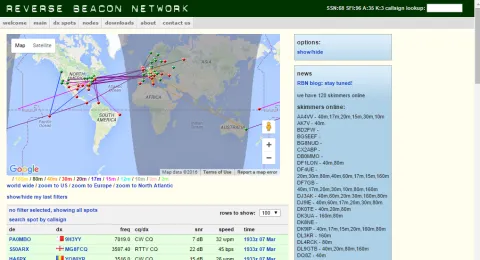
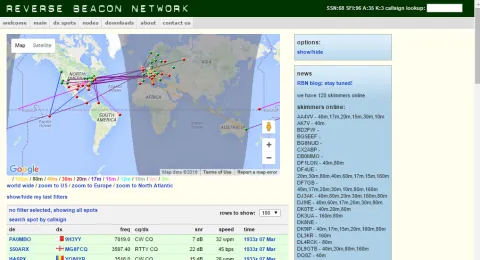
If you operate on the HF amateur bands, chances are you’ve heard of the Reverse Beacon Network. If you are a DXer or contester, you have probably used RBN spots, tested antennas or compared signals with your friends.  But did you know that now, ionospheric scientists have begun to make use of RBN data to better understand the Sun’s interactions with radio propagation, and you can participate?

Most amateurs are familiar with beacons – automated stations that transmit from a known location so a receiving station can assess propagation to the beacon’s locationbetween the two locations.  A “reverse beacon” is a station that listens to many transmitting stations and reports what it hears.  This allows propagation to be evaluated over a wide area.  The Reverse Beacon Network (RBN – www.reversebeacon.net) consists of many such stations, extending nearly worldwide and making their signal reports available over the Internet, allowing propagation to be evaluated over a wide area.

The RBN’s  has become well known since its advent in 2009. Its success has changed the face of Amateur Radio, particularly radiosport., Along with and that of similar signal monitoring and reporting systems such as WSPRNet (wsprnet.org) and PSKReporter (pskreporter.info),  has changed the face of Amateur Radio, particularly radiosport.  In addition, it providess amateurs a means to measure and experiment with propagation and other natural phenomena alongside the scientific community.  How did the RBN come to be and what lies behind it?  

2017 Total Solar Eclipse

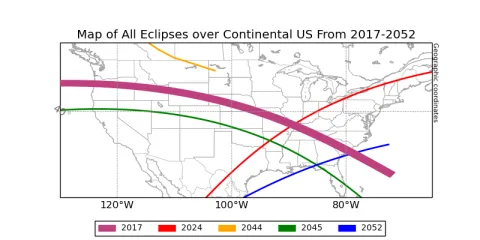
Map of US Eclipses from 2017-2052

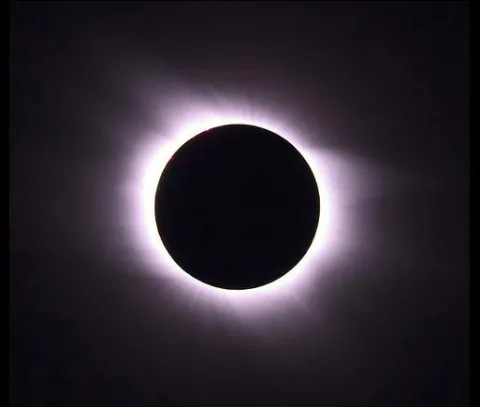
On 21 August 2017, a total solar eclipse caused the shadow of the moon to traverse the United States from Oregon to South Carolina in just over 90 minutes. Although the ionospheric effects of solar eclipses have been studied for over 50 years, many unanswered questions remain. HamSCI invited amateur radio operators to participate in a large-scale experiment which characterized the ionospheric response to the total solar eclipse and targeted open science questions.

Hundreds of ham radio operators helped out by getting on the air with the Solar Eclipse QSO Party, a contest-like operating event designed to generate data for studying the eclipse. Other HamSCI experiments included making HF Frequency Measurements, recording HF spectra, setting up a Reverse Beacon Network Receiver, participating in VLF/LF receiving experiments, and listening to AM broadcast stations. See our Eclipse Get Involved for more information.

Are you curious about how prior total solar eclipses affected the ionosphere? Read about radio experiments during the 1999 United Kingdom Total Solar Eclipse coordinated by the Rutherford Appleton Laboratory.


SEQP

Get on the air with the Solar Eclipse QSO Party!

Get Involved!

How can hams and the general public get involved?

The Experiment

Details of the plan to study the 2017 solar eclipse.


Join the HamSCI-Eclipse Mailing List


Science of Eclipses

What causes an eclipse?

The moon moving between the Earth and the Sun.

How long does it last?

  • The 2017 eclipse will travel across the US over a period of 1.25 hours.
  • Totality is only a few minutes (just under 3 minutes at most).
  • However, the eclipse will be visible for about an hour, the time it takes from time moon starts to block sun until the moon is no longer blocking the sun.
  • NASA Eclipse Animation

Where you have to be to see it?

  • Although the region of totality is only across parts of the US, there are still many places just outside the path will be able to see an almost total eclipse.
  • The interactive NASA 2017 Eclipse Map gives the eclipse conditions and times at various locations across the country (whether on the path of totality or outside it).

What is special about the 2017 Eclipse?

  • Visible to a larger group of people across the US than has been possible during anyone’s lifetime
  • We have better resources to study this eclipse than previous eclipses.

Why do scientists care about eclipses?

Lots of scientists care about eclipses. There is solar science, earth scientists, ionospheric science.

2017 Eclipse Experiment Description

Experiment Summary

Scientific Questions

  • How much of the ionosphere is affected by a solar eclipse?
  • For how long is the ionosphere affected by a solar eclipse?
  • What causes these spatial and temporal scales?

Methodology

  • Illuminate the ionosphere with an Eclipse QSO Party.
  • Use networks such as the Reverse Beacon Network to collect data.
  • Use amateur radio data to complement data from other sources.

Introduction

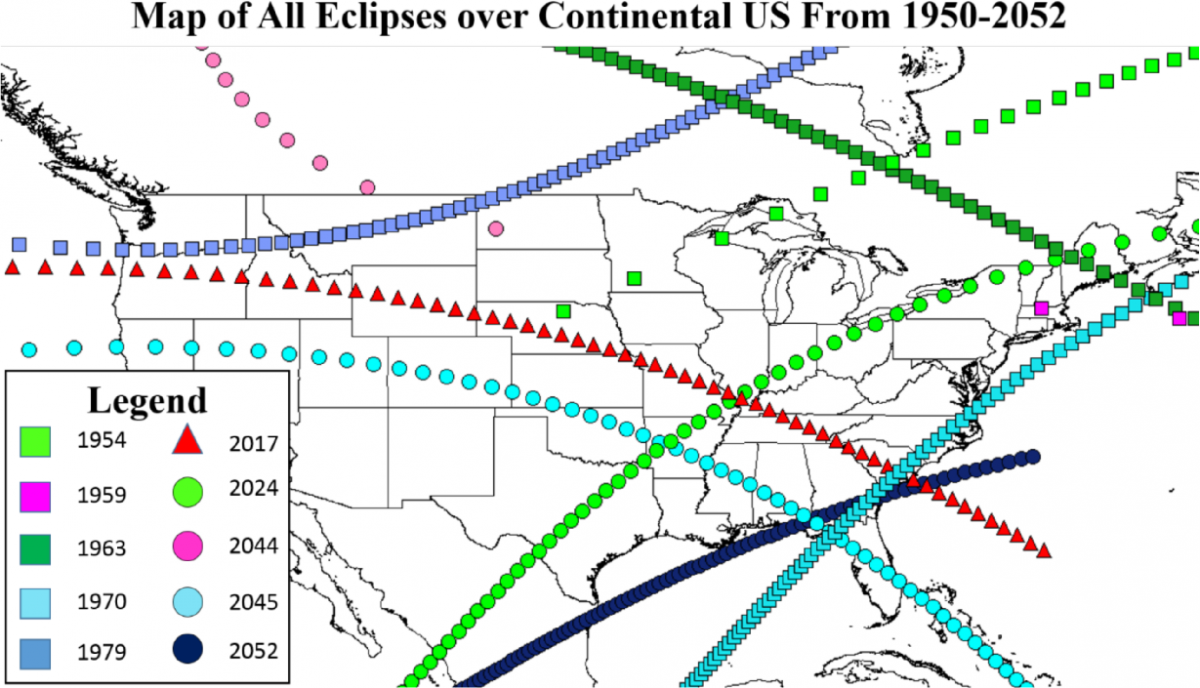
On 21 August 2017, a total solar eclipse will cause the shadow of the moon to traverse the United States from Oregon to South Carolina in just over 90 minutes. As shown in Figure 1, this will be the one of most significant solar eclipses traversing the continental United States for 100 years. While solar eclipses are perhaps best known for their stunning visual display, the shadow of an eclipse also causes changes to the ionosphere which effect radio wave propagation and are useful for the study of ionospheric physics. For a summary of ionspheric radio effects as measured during the 1999 United Kingdom Total Solar Eclipse, please see Bamford 2000.

Although the ionospheric effects of solar eclipses have been studied for over 50 years, many unanswered questions remain. Some include, “How much of the ionosphere is affected by the solar eclipse, and for how long? Why is this the case?” HamSCI is inviting amateur radio operators to participate in a large-scale experiment which will characterize the ionospheric response to the 21 August 2017 total solar eclipse and target these open questions in ionospheric physics.


Figure 1: Total solar eclipses visible in the US from 1950 to 2052.

Figure 1: Total solar eclipses visible in the US from 1950 to 2052. The 2017 eclipse (red triangles) will have an exceptionally long footprint in the heart of the continental US.


Background

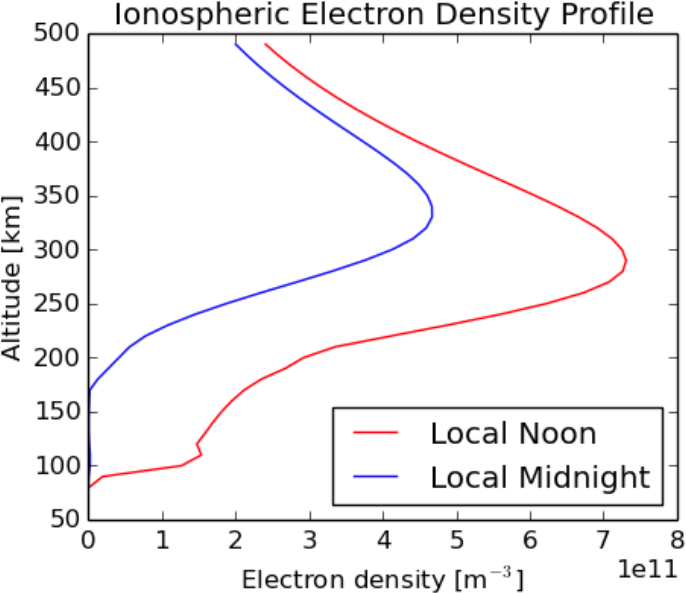
The ionosphere is produced when solar ultra violet (UV) and x-ray radiation cause neutral atoms and molecules in the Earth’s atmosphere to be stripped of negative electrons. This creates a type of gas known as a plasma, which is made of both positively and negatively charged particles. After a certain amount of time, some of these particles recombine to form neutrals again. When solar radiation is present, ionospheric production and loss processes occur simultaneously creating a strong ionosphere. When solar radiation is absent, loss processes dominate and the ionosphere becomes weaker. These effects are most commonly observed as a result of the day-night (diurnal) cycle. Figure 2 shows examples of typical day and night ionospheric profiles generated using the International Reference Ionosphere (IRI) empirical model [Bilitza et al., 2011].


Figure 2: Typical day (red) and night (blue) ionospheric profiles.

Figure 2: Typical day (red) and night (blue) ionospheric profiles.


In some ways, the shadow of a solar eclipse is similar to the darkness of night. However, there are significant differences between solar eclipses and typical day-night variations. For instance, an eclipse shadow moves faster than and in the opposite direction of the dusk or dawn terminators. Additionally, an eclipse shadow is relatively localized compared to night. Because the ionosphere does not respond instantaneously to changes in solar inputs, and several processes in addition to simple ion production and recombination are at play, it is not possible to assume that the ionosphere will respond to an eclipse in the same manner as dusk or dawn.

Previous solar eclipse studies have found that ionospheric densities at lower altitudes (D and E regions, 60 – 150 km altitude) deplete rather quickly. Conflicting results have been reported for the F region (150 – 600 km altitude), which is a region that is more effected by plasma transport processes than photoionization. Typically, it has been reported that these conditions allow for better radio wave propagation at lower frequencies (< 10 MHz) during the eclipse, as D and E region absorption disappears during this time.

Scientific Merit

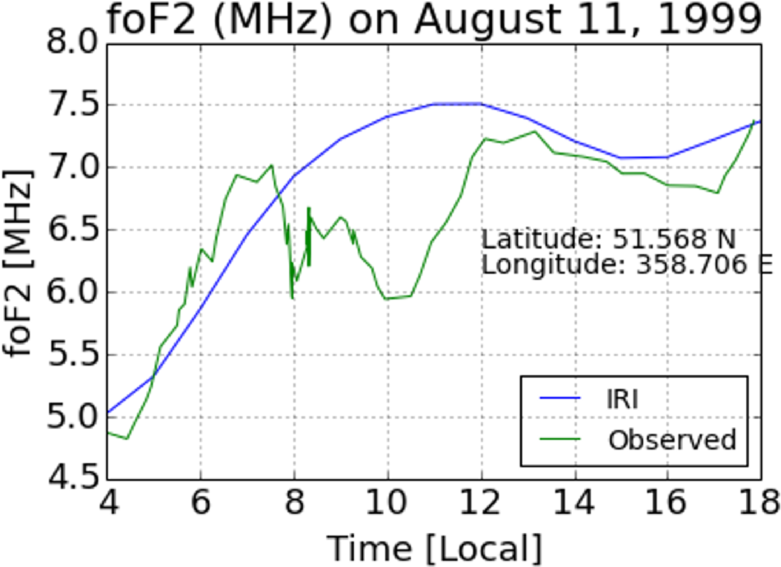
Important open questions refer to the spatial and temporal scales of eclipse ionospheric effects. Eclipse totality affects only a narrow region of the Earth’s atmosphere (on the order of a few hundred kilometers) for time periods of less than ten minutes. However, previous observations suggest that ionospheric effects are much larger and longer than might be expected. Figure 3 and Figure 4 illustrate this. Figure 3 shows the F2 region peak critical frequency (foF2) over Chilton, England during a total solar eclipse on 11 August 1999. The green line shows measurements made with an ionosonde [Afraimovich et al., 2002], while the blue line shows the expected (non-eclipsed) values generated by the IRI. The measured values depart from the expected values from 0800 to 1200 local time, much longer than the less than 10 minutes of totality. 


Figure 3: Effect of the August 11, 1999 eclipse on foF2. The decrease in the observed foF2 (green) from the IRI model (blue) over a long period coincides with partial obscuration of the solar disk.

Figure 3: Effect of the August 11, 1999 eclipse on foF2. The decrease in the observed foF2 (green) from the IRI model (blue) over a long period coincides with partial obscuration of the solar disk.


Similarly, Figure 4 shows 130.4 nm UV airglow data measured by the Special Sensor Ultraviolet Spectrographic Imager (SSUSI) satellite instrument on days before (left), during (middle), and after (right) a total solar eclipse over Africa on 29 March 2006. The middle panel shows a blue line indicating the totality path, as well as a large region (~3300 km diameter) of depleted airglow that roughly corresponds with the region of partial eclipse shadow. Recent studies, such as [Choudhary et al., 2011], suggest that complex plasma processes may cause larger spatial regions of the ionosphere to be affected than would be predicted by simple photochemistry.
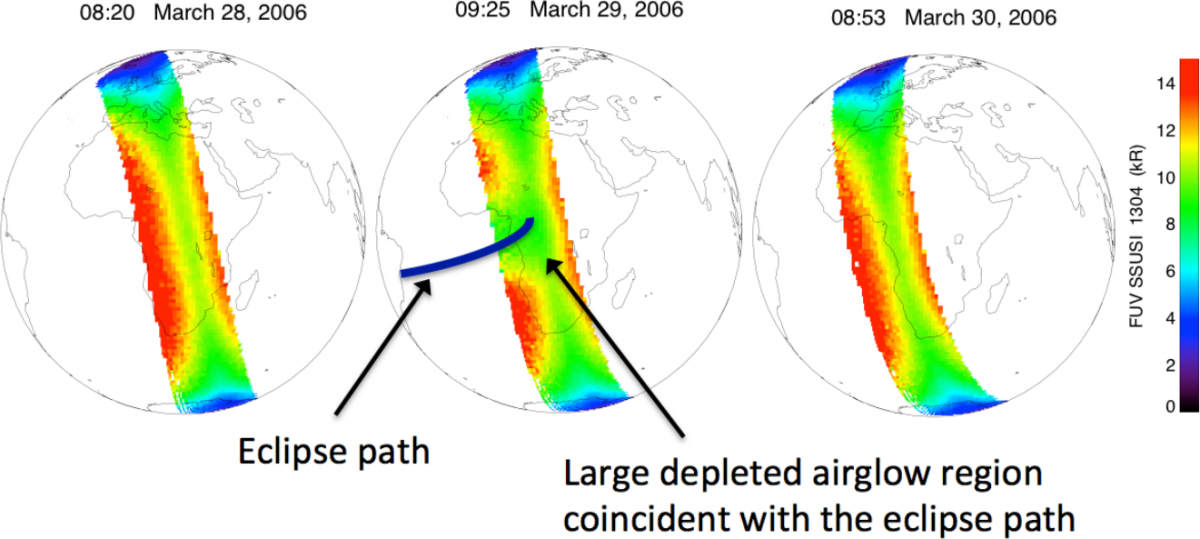
 

Figure 4: Special Sensor Ultraviolet Spectrographic Imager (SSUSI) airglow data showing a large depleted airglow region associated with a total eclipse in 2006. The three panels show data from days before, during, and after the eclipse at roughly the same location and local time.Figure 4: Special Sensor Ultraviolet Spectrographic Imager (SSUSI) airglow data showing a large depleted airglow region associated with a total eclipse in 2006. The three panels show data from days before, during, and after the eclipse at roughly the same location and local time.


Although the ionospheric effects of total solar eclipses have been studied for over 50 years, these questions regarding the spatial and temporal scales of eclipse effects have not been adequately answered. There are a number of reasons for this. First, eclipses are relatively rare events which do not frequently traverse geographic areas which are well instrumented for ionospheric studies. Next, technological advances have made it only recently possible to monitor the ionosphere over very large geographic areas with both high temporal and spatial resolution. Finally, the ionospheric response to an eclipse is dependent on season, time of day, and location on Earth (due to differences in the shape and orientation of the Earth’s magnetic field at different locations). This makes every eclipse uniquely valuable for scientific study. The 21 August 2017 eclipse will take place over a large geographic region which is well instrumented for studying ionospheric effects, and therefore presents an excellent opportunity for characterizing the spatial and temporal aspects of the ionospheric response.

Amateur Radio as a Scientific Instrument

Amateur radio operators routinely use frequencies spread across the medium and high frequency bands (1.8 – 30 MHz) to engage in two-way communications across large geographic areas. Details of these communications are recorded in private logs, as well as a public computer network known as the DX Cluster. Recent advances in information technology, signal processing, and software defined radio (SDR) have led to the development of automated observation and reporting systems such as the Reverse Beacon Network (RBN). It has been shown that data from these systems can be used to identify and characterize large-scale ionospheric disturbances [Frissell et al., 2014].

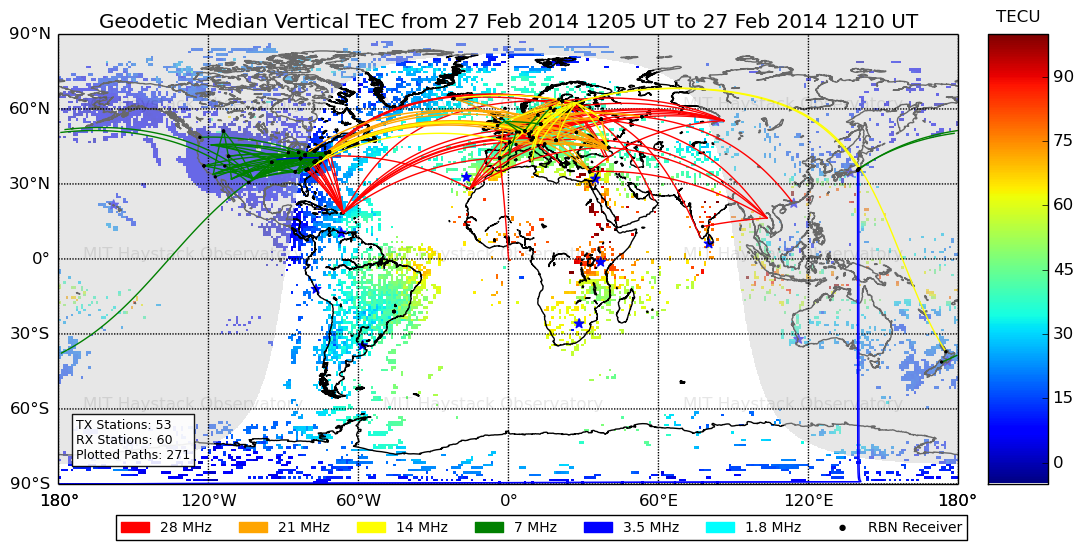
Figure 5 and Figure 6 illustrate diurnal propagation effects observed by the RBN. Figure 5 shows a 5 min interval when both the United States and Europe are in darkness, while Figure 6 shows a 5 min interval when both continents are in daylight. RBN traffic is indicated by lines color-coded by frequency. Black dots indicate RBN receiving stations. Colored dots represent GPS-TEC measurements, which are discussed in the next section. The RBN data shown in these figures characterizes what is typically expected of day and night HF propagation and ionospheric conditions. That is, nighttime conditions (Figure 5) are dominated by communications on frequencies less than 10 MHz, indicating a weaker ionosphere which reflects lower frequencies but cannot refract higher frequencies. Daytime conditions (Figure 6) are dominated by communications on frequencies greater than 10 MHz, indicating a stronger ionosphere which refracts higher frequencies but absorbs lower ones.
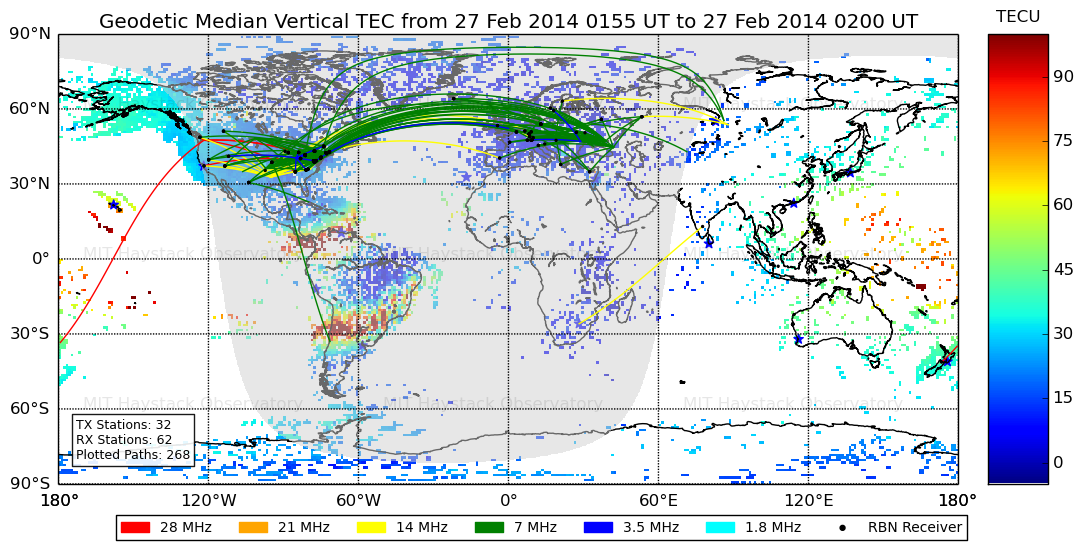
 

Figure 5: RBN Network Traffic between the US and Europe during nighttime conditions. Note that the green links represent low frequencies, because absorption is minimal in nighttime conditions.Figure 5: RBN Network Traffic between the US and Europe during nighttime conditions. Note that the green links represent low frequencies, because absorption is minimal in nighttime conditions.


Figure 6: Same format as Figure 5, but for daylight conditions. Note that the red and orange links correspond to higher frequencies, which are less effected by D and E region absorption.Figure 6: Same format as Figure 5, but for daylight conditions. Note that the red and orange links correspond to higher frequencies, which are less effected by D and E region absorption.


Using this and other similar techniques, HamSCI will use amateur radio data to characterize the spatial and temporal response of the ionosphere to the 21 August 2017 total solar eclipse. It has been recognized that the use of amateur radio signals presents certain challenges for scientific analysis. Some of these challenges include the tendency of operators to transmit only on frequencies which provide the best communication links, a possible lack of amateur radio operations during the period around the eclipse, and an uncertainty as to what equipment (e.g., antenna pattern, transmit power level) is in use. HamSCI intends to mitigate these factors by partnering with the American Radio Relay League (ARRL) to sponsor an Eclipse QSO Party, or contest-style operating event which takes places during the eclipse. The rules of this operating event will be written in such a way to help optimize the experiment. The Radio Society of Great Britain (RSGB) sponsored a similar event during the 20 March 2015 solar eclipse in Europe. Additionally, the operators of the Reverse Beacon Network have joined the HamSCI organization and are working to make improvements to the scientific capabilities of the network.

Additional Ionospheric Instrumentation

In addition to amateur radio observations, many additional, well-established space physics instruments will be used to monitor ionospheric conditions during the 21 August 2017 total solar eclipse. These include measurements by the Super Dual Auroral Radar Network (SuperDARN), Global Positioning System Total Electron Content (GPS-TEC) receivers, ionosondes, and more. Each of these instrument networks sense the ionosphere in a different way and in different locations. Combining the data from these networks together will allow for the most complete characterization of the ionospheric response to the eclipse as possible.

As an example of how this additional data will be used, Figure 5 and Figure 6 show GPS Total Electron Content (GPS-TEC) data beneath the Reverse Beacon Network propagation paths. TEC is a measure of the total number of electrons in the ionosphere on a path between a GPS satellite in space and a GPS receiver on the ground. The speed of a radio signal through the ionosphere is directly related to both the frequency of operation and the density of the ionospheric plasma it travels through. Because certain GPS receivers receive two separate GPS frequencies simultaneously, it is possible to determine the delay between the received signals and estimate the total number of electrons in a column along the propagation path [Rideout and Coster, 2006]. Each TEC Unit (TECU) is equal to 1016 m-2 electrons.  Figure 5 and Figure 6 show that, as expected, TEC is high in daytime regions, but low in the night. It is worth noting that due to ground-based receiver requirements, GPS-TEC measurements are only available over and near certain landmasses. There is no coverage over the oceans, and somewhat limited coverage in the middle of the United States. Amateur radio data has the potential to provide information about the ionosphere in places where GPS-TEC data is not available.

Summary

On 21 August 2017, a total solar eclipse will traverse the continental United States from Oregon to South Carolina in a period of just over 90 minutes. Previous research shows that the shadow of the eclipse will impact the ionospheric state, but has not adequately characterized or explained the temporal and spatial extent of the resulting ionospheric effects. HamSCI is inviting the amateur radio community to contribute to a large scale experiment by participating in an Eclipse QSO party and further developing automatic observation networks such as the Reverse Beacon Network. Data resulting from these activities will be combined with observations from existing ionospheric monitoring networks in an effort to characterize and understand the ionospheric temporal and spatial effects caused by a total solar eclipse.

References

Afraimovich, E. L., E. A. Kosogorov, and O. S. Lesyuta (2002), Effects of the August 11, 1999 total solar eclipse as deduced from total electron content measurements at the GPS network, J. Atmos. Solar-Terrestrial Phys., 64(18), 1933–1941, doi:10.1016/S1364-6826(02)00221-3.

Bamford, R. (2000), Solar Eclipse 11 August 1999: Project Final Report, Radio Communication Research Unit, Rutherford Appleton LaboratoryarXiv:1703.01491.

Bilitza, D., L.-A. McKinnell, B. Reinisch, and T. Fuller-Rowell (2011), The international reference ionosphere today and in the future, J. Geod., 85(12), 909–920, doi:10.1007/s00190-010-0427-x.

Choudhary, R. K., J.-P. St. -Maurice, K. M. Ambili, S. Sunda, and B. M. Pathan (2011), The impact of the January 15, 2010, annular solar eclipse on the equatorial and low latitude ionospheric densities, J. Geophys. Res. Sp. Phys., 116(A9), A09309, doi:10.1029/2011JA016504.

Frissell, N. A., E. S. Miller, S. R. Kaeppler, F. Ceglia, D. Pascoe, N. Sinanis, P. Smith, R. Williams, and A. Shovkoplyas (2014), Ionospheric sounding using real-time amateur radio reporting networks, Sp. Weather, 12(12), 651–656, doi:10.1002/2014SW001132.

Rideout, W., and A. Coster (2006), Automated GPS processing for global total electron content data, GPS Solut., 10(3), 219–228, doi:10.1007/s10291-006-0029-5.
 

Get Involved!

Below are several projects and events in which amateur radio operators can help to study the ionospheric effects of the total solar eclipse. Over time, the information on this page will be updated and developed. Please join our mailing list to stay up-to-date on current developments. Not a ham radio operator yet? Learn more about it from the American Radio Relay League.

Join the HamSCI-Eclipse Mailing List


Solar Eclipse QSO Party

During the Eclipse on August 21, 2017, the American Radio Relay League will sponsor an Eclipse QSO Party. This is a contest-like event designed to generate numerous QSOs across the HF bands for the purpose of studying propagation changes during the eclipse. The data from this event will consist of particpant logs, Reverse Beacon Network Observations, and QSO party recordings. This is similar to the 2015 Solar Eclipse QSO  Party organized by the Radio Society of Great Britain (RSGB). More details regarding this event will be posted here and in QST.


Reverse Beacon Network

The Reverse Beacon Network (RBN) is a network of Software Defined Radio (SDR) receivers which automatically decodes and reports spots of CW and digital signals. These spots are archived and available for analysis on the RBN website. To make the RBN data more valuable for scientific studies, more RBN receivers are needed. Amateur radio operators are encouraged to setup their own RBN receivers to contribute data.


HF Frequency Measurement Experiment

Rapid changes in ionospheric electron density caused by the motion of the shadow of an eclipse is known to cause Doppler shifts on HF ray paths propagating through the eclipse region. For example, see Figure 7 in Boitman et al., 1999. We request that all amateur radio stations capable of making high-quality HF frequency measurements participate in this experiment and publish their data to the HamSCI community on the open-data sharing site zenodo.org.


HF Wideband Recording Experiment

Total solar eclipses are known to cause changes to the ionosphere and high frequency propagation. During the 2017 American Total Solar Eclipse, numerous HF radio sources will be on the air to help study these effects. We request that amateur radio stations capable of making wideband digital HF recordings participate in this experiment and publish their data to the HamSCI community on the open-data sharing site zenodo.org.


EclipseMob VLF/LF Experiment

EclipseMob will leverage citizen science to create the first large, geographically distributed set of low-frequency (LF, 30-300 kHz) skywave propagation observations during the eclipse of August 21, 2017, which will be analyzed to provide new information about the location and geometry dependence of ionization and recombination behavior in the D and E layers of the ionosphere, while also stimulating public interest in science and engineering. EclipseMob is an NSF-sponsored collaboration between UMB and GMU with cooperation from SPAWAR and GA Tech. Contact Bill Liles, NQ6Z, at [email protected].


S&T AM Broadcast Experiment

If you are not a ham radio operator, don't have access to specialized radio equipment, or simply prefer listening, then this eclipse experiment is for you! Contributing author Joe Rao of Sky & Telescope Magazine is asking readers to submit reception reports of AM broadcast stations heard during the upcoming August 21, 2017 Total Solar Eclipse. The shadow of the moon is expected to cause a depletion in the D region of the ionosphere, thereby reducing ionospheric absorption in the AM broadcast band (540 - 1700 kHz) and allowing for long-distance skywave propagation. This same mechanism allows for long-distance propagation of AM broadcast stations at night. This is an excellent eclipse radio experiment for people who do not have ham radio licenses or access to specialized equipment. For more information, please see Joe's Sky & Telescope article.

The Reverse Beacon Network (RBN)

The face of the Reverse Beacon Network (RBN) has become well known since its advent in 2009, but what lies behind it?  Why has it become so successful, changing the face of amateur radio, particularly Radiosport?  How is it relevant to the objectives of HamSCI?

Follow the links below, and all will become clear, we hope.

RBN Overview What makes a good skimmer?    


2017 Total Solar Eclipse

On August 21, 2017, there will be a total solar eclipse over the United States traveling from Oregon to South Carolina. Solar eclipses offer a way to study the dependence of the ionospheric density and morphology on incident solar radiation. There are significant differences between the conditions during a solar eclipse and the conditions normally experienced at sunset and sunrise, including the east-west motion of the eclipse terminator, the speed of the transition, and the continued visibility of the corona throughout the eclipse interval. Taken together, these factors imply that unique ionospheric responses may be witnessed during eclipses. These include changes in the ionospheric electric fields, changes in the Total Electron Content (TEC) along paths through the eclipsed region, and variations in the density and altitude of the F2 peak. Several studies over the past century investigated these effects; however, some of the results from these studies are contradictory. These contradictions and the studies’ limited spatial resolution leave many fundamental questions unanswered. The advent of several mid-latitude Global Positioning System (GPS) and radar networks in the past few decades, such as the Continuously Operating Reference Station (CORS) system and the Super Dual Auroral Radar Network (SuperDARN) radar system, have enabled ionospheric observations with hitherto unprecedented spatial resolution. Also, the establishment of several nationwide amateur radio reporting systems, such as the Reverse Beacon Network (RBN) that monitors radio wave propagation on the high frequency (HF) bands, offers the potential for evaluating changes in ionospheric conditions with unprecedented spatial resolution. We propose to study the effects of the total solar eclipse on the ionosphere using a combination of GPS receivers, the SuperDARN radar system, HF band amateur radio, and plasma modeling. The overall objectives of this study are to characterize the changes in F-region plasma morphology during the eclipse over a larger spatial domain than any previous eclipse experiment. In addition, the amateur radio component of our study offers a unique opportunity to further engage the amateur radio community nationwide in a scientific study.

Forward-Scatter Meteor Radar Network

Leader
Ciprian "Chip" Sufitchi N2YO
Mailing List
TBD
Mission Statement

The concept is to develop a distributed, GPS-disciplined forward-scatter radar network for meteor trajectory reconstruction and radio meteor astronomy. The basic idea would be to obtain a license for a low-power CW beacon operating around 50 MHz and install it at a suitable location in the continental United States, ideally at a university or research institution. A distributed network of volunteer-operated, GPS-synchronized SDR receivers would detect reflections from meteor trails. By combining observations from multiple receiving sites using interferometric and time-difference-of-arrival techniques, it should be possible to estimate meteor trajectories, velocities, altitudes, and radiants.
Such a network could complement existing optical meteor observations by providing continuous radio coverage, including daytime observations and the detection of weak or otherwise optically unobservable meteor showers. In the longer term, it might also contribute to identifying previously unknown or extinct meteor streams associated with dormant comets.
The overall concept is not entirely new. Similar principles are employed by the BRAMS network in Belgium, which uses forward scatter, and by the Canadian Meteor Orbit Radar (CMOR), which uses a backscatter configuration. However, we believe there is an opportunity to develop a coordinated citizen-science network in North America, with an emphasis on calibrated instrumentation, open data, and radio astronomy applications. Another attractive aspect is that the required funding appears relatively modest. Most receiving stations could be volunteer-operated using existing
SDR equipment, while the primary infrastructure would consist of the beacon, supporting software, and a centralized data-processing system. This could make the project well suited for collaboration among HamSCI, SARA, universities, and other interested organizations.

- Chip N2YO

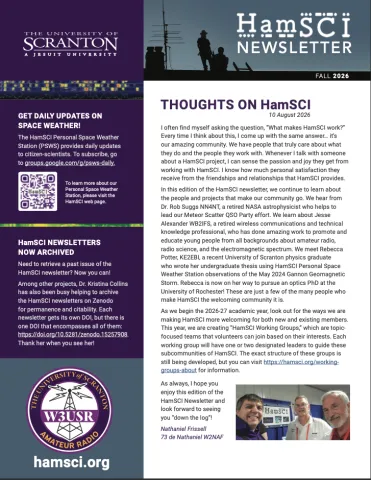
HamSCI Newsletter Volume 2, Number 2 Published

Cover of HamSCI Newsletter, Fall 2026 Edition

The latest HamSCI Newsletter, the Fall 2026 edition, has been published.  It is available on the HamSCI Newsletter page.

Articles include....

  • Thoughts on HamSCI from Nathaniel Frissell W2NAF
  • HamSCI in the News
  • Amateur Profile:  Jesse Alexander WB2IFS
  • 2026 Meteor Scatter QSO Parties by Gary Mikitin AF8A
  • Student Profile:  Rebecca Potter KE2EBI by Emma Moran KD3CKD 
  • Contributor Column:  The Maunder Minimum by Ron Wilcox KF7ZN
  • Students Learn About HamSCI by Ron Kumon K8DTJ and Ruth Willet KM4LAO
  • 2027 HamSCI Workshop Announcement (Save the date:  April 17-18, 2027, coinciding with both Citizen Science Month and World Amateur Radio Day)

Thanks to the hard working Newsletter Editorial/Production Team: Ed Efchak WX2R, Mary Lou West KC2NMC, Vikki Lawhon (University of Scranton) and all of the article contributors