
Overview
The Whistler Catcher VLF Reception System is a very low frequency software defined radio (VLF SDR) system. It utilizes an open hardware, open software, and open data design and philosophy to facilitate and promote citizen science in the study of VLF phenomena; including the Earth's natural radio emissions, VLF amateur radio transmissions in the 8270 Hz and 5710 Hz bands, and lightning stroke location. It is one component in the HamSCI Personal Space Weather Station (PSWS).
The system consists of both hardware and software. The hardware consists of VLF Active Antenna along with a VLF interface box to supply power and interface the signal; a GNSS interface box to provide a pulse per second (PPS) signal for the purposes of frequency calibration and timestamping; a Behringer UMC202HD USB audio interface for data acquisition, and a thin client PC with serial port. The designs of the VLF Active Antenna, VLF Interface Box, and GNSS Interface Box are all open hardware. The software includes vlfrx-tools, an open source software toolkit primarily for the application of VLF signal capturing, calibration, timestamping, filtering, storage, live listening, retrieval, visualization, EbNaut amateur mode decoding, and other signal processing functions in over 40 individual program utilities. It was written by Paul Nicholson G8LMD [SK], a passionate VLF enthusiast to which the Whistler Catcher VLF Reception System is dedicated to.
Sourcing
More information on the Whistler Catcher VLF Reception System will be added soon. If you are interested in becoming a host for the Whistler Catcher VLF Reception System, please see the VLF site specific hosting requirements below, followed by a link to the Interested Host Form here on the HamSCI website. If you have questions and/or would like more information, we suggest that you join the hamsci-psws Google Group and post inquiries there.
VLF Site-Specific Hosting Requirements
VLF reception, especially at the very, very low frequencies involved (5 and 8 kHz bands) is much, much different than reception on broadcast frequencies (medium wave, shortwave, VHF, UHF, etc.). Practical experience leads to the following siting requirements. Ideally, every VLF Whistler Catcher active antenna would conform to all of these conditions, though, in reality, compromises are inevitable. HamSCI would be glad to discuss the reasons behind these requirements, and if/when they can be relaxed.
- 200 ft separation from above/below ground aerials, wiring, ground wires to a home or other source of mains harmonics (same as magnetometer considerations, see above)
- should be at least 30 ft away from a tree's farthest overhanging branch
- cannot be installed in brush, bushes, or under trees, but tall grasses are acceptable
- should have an earth ground connection at all times
- open fields are usually the best locations if the above conditions could be satisfied.
HamSCI Support: HamSCI has been awarded a grant from the National Science Foundation to fund up to thirty (30) complete PSWS (HamSCI HF Receivers + Ground Magnetometers + VLF Whistler Catchers). In 2026, HamSCI be will selecting locations based on an application review process, with a goal of siting thirty systems at scientifically advantageous locations across North America. If you are interested in being considered as a PSWS host, please navigate to the Searching for Instrumentation Sites page, review the site selection criteria, and if you feel you qualify, complete the Interested Participant Form at the bottom of the page. There's also a button to submit questions to the project team. The actual ship date for the first units is yet to be determined...if all goes well, Q3 and Q4, 2026.
VLF Whistler Catcher Reference Documents, Images, Diagrams
- VLF Active Antenna Element image
- GNSS Interface Board Assembly image
- GNSS Interface Box Connections image
- VLF Interface Board and VLF Active Antenna Preamp Assembly image
- VLF Antenna Installed at Scranton, PA
- Diagram - GNSS Interface
- Diagram - VLF Whistler Catcher Interface
- Diagram - VLF Whistler Catcher Reception System
Further Information
- Support may be obtained by checking in to one of the TAPR-HamSCI Technical Sessions on Zoom. All are welcome to join, in ask questions, assist others. The Zoom link can be found on the HamSCI Get Involved page.
- Jonathan Rizzo KC3EEY, the developer of this instrument, describes the first year a prototype system was in operation: hamsci.org/publications/w2naf-kc3eey-vlf-observatory-year-operation
- The Whistler Catcher is just one module of the HamSCI Personal Space Weather Station (PSWS) Learn more about the PSWS project here: Overview of the Personal Space Weather Station (PSWS)
Credits
- The circuit, PCB, and case of the GNSS Interface box was designed in conjunction with Paul Elliott WB6CXC of Turn Island Systems. Paul's efforts were donated to the project.
- Dr. Nathaniel Frissell, W2NAF, was the Principal Investigator on National Science Foundation grant 2002278 ('Collaborative Research DASI Track 1 - Personal Space Weather Station'). Their efforts were supported by additional NSF grants (1922972, 1932997) and the institutions noted below.
In Memoriam
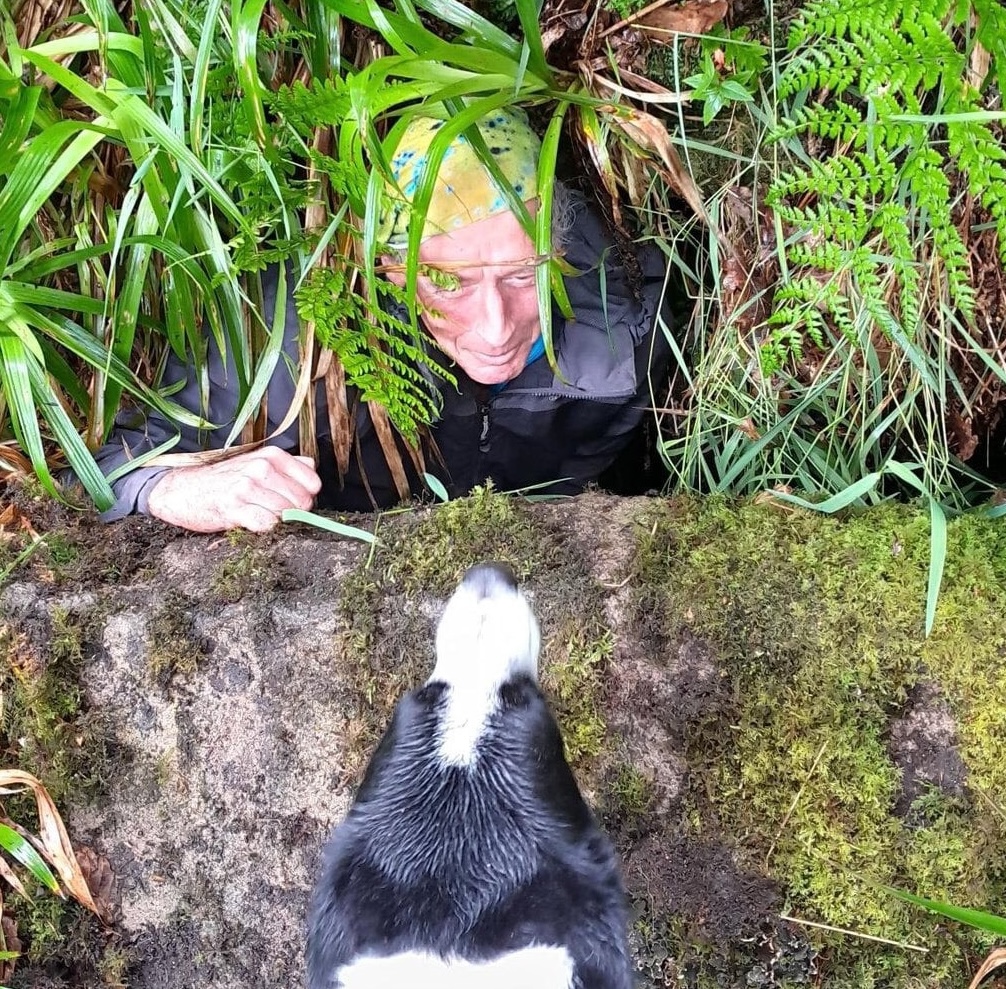
The HamSCI Whistler Catcher VLF Reception System is completely and solely dedicated to Paul Nicholson G8LMD [SK], a passionate VLF enthusiast whose contributions to this project and the VLF Community are innumerous. Paul pioneered VLF reception techniques at home for the VLF Community which allows the VLF radio amateur, student, researcher, and anyone else who is passionate and interested to produce science-grade data and observations of VLF phenomena. Paul’s biggest contribution, in addition to VLF reception techniques, is vlfrx-tools, an open-source tool kit of 48 individual utilities that allows the use of high-quality commodity hardware and GNSS receivers to make these high-quality, science-grade observations of VLF phenomena, including automated detection of whistlers and dawn chorus, a mains hum tracking filter, and sferic time of group arrival for lightning location calculation. Paul’s other biggest contribution, the hardware and software for the Indian Lightning Detection Network (ILDN), is the biggest inspiration of this project. Paul’s contributions simply cannot be understated, and this project’s goal is to not only continue Paul’s work, but to make the world a better place because of it, as Paul always did.
Paul also was selflessly involved in other endeavors, including serving as the chairman of the board and treasurer of the Gaddings Dam group whose purpose is to maintain and preserve Gaddings dam in Todmorden, England. Paul also loved dogs and served as a dogsbody (being a dogsbody involves hiding yourself in inconspicuous places outside to train the search and rescue dogs) for the Calder Valley Search and Rescue Team.

3 July 2026: Third Draft