Publications

HamSCI at Huntsville Hamfest

HamSCI is planning to have a well-staffed booth at the 2026 Huntsville Hamfest, August 22-23, 2026.

Located in Huntsville, Alabama, they claim to be the "World's Friendliest Hamfest®" since 1954.  

HamSCI members from around the US will be in attendance, at the booth.  If you visit, expect to see Bob Gerzoff WK2Y, Rob Suggs NN4NT, Bob Reif W1XP and Bill Engelke AB4EJ in and out of the booth over the weekend.   They will be answering questions and recruiting like-minded citizen scientists.  Of course, all HamSCI members are welcome to stop in, sit a spell, and hand out a few HamSCI business cards to those who wander by.

This event is also the venue for the ARRL's 2026 National Convention, so a great opportunity to stop by the League's many-faceted booths and displays, and say 'hello' to our partners from Connecticut (ARRL = The National Association for Amateur Radio©).

Also worth noting: Huntsville is home to the U.S. Space & Rocket Center - a fascinating side trip, according to those who have visited.

HamSCI Ray Tracing Working Group

The HamSCI Ray Tracing Working Group currently covers (but is not limited to) two projects:
 
Project 1
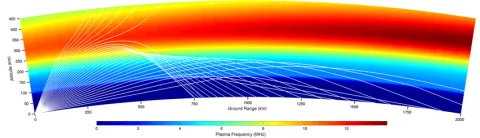
Ionospheric Model Validation and Development of an Open-Source HF Ray-Tracing Toolkit Leveraging HamSCI Citizen Science Data
NASA HCSI, Award Number: 80NSSC26K0051, 3 years (2026-2029), PI: Kornyanat Hozumi, KM7GYX (University of Scranton), Co-Is: Nathaniel Frissell W2NAF (University of Scranton), Mark Fenner (University of Scranton)
 
1. Developing a 3D HF ray-tracing toolkit to model complex HF wave paths
2. Validating ionospheric models using HamSCI observational data
3. Studying space weather effects on anomalous HF communication, including disruptions caused by Equatorial Plasma Bubbles (EPBs)
4. Improving accessibility and engagement by providing documentation, tutorials, and opportunities for citizen scientists to contribute to research and toolkit development
 
Project 2
Crowdsourced Observations for Ionospheric Model Validation and a Diagnostic Approach for Forecasting Equatorial Spread F
ONR SUNDIAL, Award Number: N000142612000, 3 years (2025-2028), PI: Kornyanat Hozumi, KM7GYX (University of Scranton), Co-I: Nathaniel Frissell W2NAF (University of Scranton)
 
1. Developing a reusable validation framework for Navy-relevant ionospheric models using HamSCI HF observations and ray-tracing techniques
2. Investigating the initiation of Equatorial Spread F (ESF) using ionograms, ray tracing, and multiple background-ionosphere scenarios
Leader
Dr. Kornyanat Hozumi, KM7GYX
Mailing List
https://groups.google.com/g/hamsci-ray-tracing
Mission Statement

The mission of the HamSCI Ray Tracing Working Group is to bring together amateur radio operators, citizen scientists, software developers, and professional researchers to advance HF propagation and ionospheric science.
The group promotes the development and use of open-source HF ray-tracing tools, the validation of ionospheric models using HamSCI observations, and collaborative studies of space weather and unusual HF propagation. It also provides a forum for tutorials, technical discussions, software feedback, and community research projects.

HamSCI Featured in QST Magazine

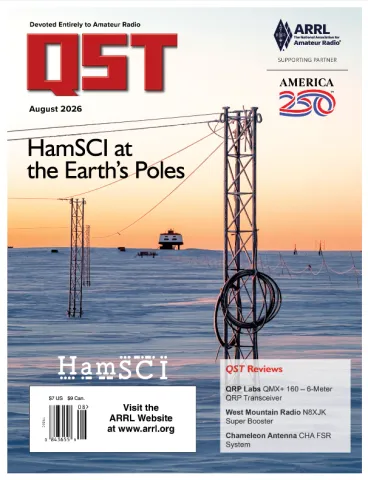
QST Magazine August 2026 Cover

For the second year in a row, HamSCI is prominently featured in the August issue of the ARRL's QST magazine.  The issue's cover photo and sixteen pages of content are devoted to our science/citizen science collaboration.  Thanks to the generosity of the ARRL, The National Association for Amateur Radio©, the cover and the special section can be read here, on the HamSCI website.

The issue's feature article, The HamSCI Personal Space Weather Station HF Receiver, by Nathaniel Frissell W2NAF, thoroughly describers the instrument, where it has been deployed, the teamwork behind its hardware and software development, and how it is used to generate science-worthy data.

Rich Mosenson W2VU authored a detailed writeup of the 2026 HamSCI Workshop, which was held near ARRL Headquarters at Central Connecticut State University.  

A number of presenters (Paul Elliott WB6CXC, Gwyn Griffiths G3ZIL, Ted Beach KA8YRU) reprised their talks in the Oral Sessions Sampler.  (ARRL members have access to additional on-line content, including talks by David McGaw N1HAC, Lanika Ruzhitskaya and Jefferey Mendenhall KC1ZQT)

The section concluded with A Glimpse of the Workshop Poster Session, with three poster authors (Owen Ruzanski KD3ALD, Kristina Collins KD8OXT, Nina Tormann KD3BJV) reviewing their Workshop submissions in detail.

The HamSCI Community is led by The University of Scranton Department of Physics and Engineering W3USR, in collaboration with Case Western Reserve University W8EDU, the University of Alabama, the New Jersey Institute of Technology Center for Solar Terrestrial Physics K2MFF, the MIT Haystack Observatory, Dartmouth College, the Space Science Institute, TAPR, additional collaborating universities and institutions, and volunteer members of the amateur radio and citizen science communities. HamSCI receives financial support from the United States National Science Foundation, NASA, Amateur Radio Digital Communications (ARDC), the Yasme Foundation, and the Frankford Radio Club.


European Eclipse - 12 August, 2026 - RSGB Events

RSGB Tonight at 8 logo

The western portion of the Europe will experience a solar eclipse on August 12, 2026, and the Radio Society of Great Britain (RSGB) is planning a series of operating events in which the ham radio and medium wave listening communities can participate.

The RSGB's regular, live-streamed program Tonight@8, recently hosted Steve Nichols, G0YKA to describe the events.  Originally 'broadcast' on 6 July 2026, a recording is available on YouTube:

https://www.youtube.com/watch?v=v0G3SaLTLp4&list=PLmtHS6LSBybYvVmSc3_9i5HirzfuXlJT1&index=2&t=11s.

Steve's talk, The Solar Eclipse and How You Can Participate, beings at approximately the 14th minute.

In the roughly 45 minute recording, Steve describes the eclipse path, where and when to expect total vs partial coverage, and many details on how to participate in the RSGB events:  An HF contest (40 and 80 meters) and a medium wave listening event.  Modes to be used include WSPR, CW and FT8 - plus good old audio monitoring (aided by Spectrum Lab software, if possible).

The event is sponsored by the RSGB's Propagation Studies Committee, on which a number of HamSCI members sit: Jim Bacon G3YLA, Chris Deacon G4IFX, and Gwyn Griffiths G3ZIL \. Carl Luetzelschwab K9LA and Bill Liles NQ6Z are associate members. The committee is chaired by Steve Nichols G0YKA.

Good luck to all who participate, and if you happen to be anywhere near the path, don't forget to leave the shack at the proper time, put on your eclipse glasses, and have a look!


Resources

Follow HamSCI's Activities

Get Your Ham Radio License

Study Guides

Practice Tests

Videos and Tutorials

Learn Morse Code

Education

Space Science, Space Weather, and Propagation

Ham Radio Reporting Networks

Ham Radio Reporting Networks have been used by contesters and researchers alike to assess propagation conditions. Most of our current HamSCI projects rely heavily on one or more of these networks.

Reverse Beacon Network (RBN) How-To

The Reverse Beacon Network (RBN) is a network of Software Defined Radio (SDR) receivers which automatically decodes and reports spots of CW and digital signals. These guides describe how to setup multiband RBN skimmers and make recordings to a file.

Measurement, Calibration, and Calculation

Software Defined Radios (SDR) and Related Technologies

IQ Files

Projects from Around the Internet

Citizen Science Projects

Solar Eclipses

History

Ham Radio Research Organizations

The HamSCI Personal Space Weather Station (PSWS)

Personal Space Weather Station Logo

Overview

The Personal Space Weather Station (PSWS) is a multi-instrument, ground-based system designed to observe space weather effects, both as a single-point measurement and as a part of a larger, distributed network. The PSWS elements are designed to be relatively low cost (between 100 and 1000 US dollars), easily constructed and deployed by science professionals, educational institutions and citizen scientists.   HamSCI and its partners are constantly expanding the network, improving the PSWS data collection hardware and software, and growing the network infrastructure for data storage, retrieval and analysis.  The project is led by the The University of Scranton, in collaboration with numerous universities, research institutions and funding partners (see their logos at the bottom of this page).

An excellent video presentation, made by Gwyn Griffiths G3ZIL, explains the Development, Deployment and the Data of the PSWS, covering all four components mentioned below.  Gwyn is a long time contributor to HamSCI, and a member of the Radio Society of Great Britain's Propagation Studies Committee. The video is presented here, courtesy of AMSAT-SA (who hosted the forum at which Gwyn presented in July of 2026). 

The PSWS is fundamentally a data collection system (visit the PSWS data server).  As with any scientific endeavor, data is crucial to HamSCI's efforts, allowing researchers to analyze and interpret information in order to draw meaningful conclusions and make informed decisions on future research.  HamSCI highly encourages all readers to explore the information here and consider building and deploying one or more PSWS components, contributing data to the research efforts.  Questions are welcomed at HamSCI's general email address.  

Getting Involved

HamSCI welcomes all those interested in space weather and its effects on the Earth's ionosphere.  HamSCI members consist of citizen scientists, educators, university researchers, and professional space scientists - a broad spectrum of interests, educational experiences and practical backgrounds.  Visit our About and Get Involved pages to learn more about our motivation, scientific focus, and resources such as Google Groups and regular telecons on related subjects.

HamSCI is continually creating and updating the PSWS documentation.  Ideally, it should be complete enough that a person with moderate hardware, software and integration skills can build and operate their own PSWS components.  The HamSCI community (1500+ members) is available to support your efforts.

Update, July, 2026:  HamSCI has received grant monies for deploying PSWS components at little or no cost to volunteers willing to host one or more of the components described here.  Depending on which component is hosted, the host may be expected to erect a simple antenna, bury a magenetometer sensor, and, in all cases, provide an Internet connection.  Requirements are spelled out, in some detail, on each PSWS component web page.  Visit Searching for Instrument Sites and Hosts to learn more about this program, including site requirements and how to apply.

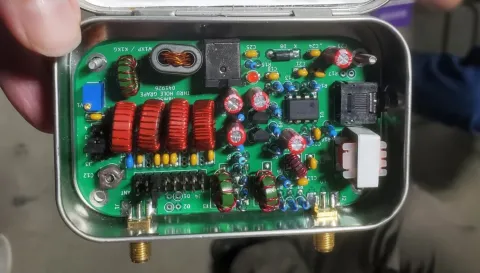
Looking to build a Grape PSWS?  The PSWS concept was born from the success of the Grape low-IF, single frequency Doppler receiver.  The original Grape 1 was followed by Grape 1 DRF, then Grape 2 models.  Most were deployed around the time of the 2023 and 2024 North American solar eclipses.  Many of those units are still in service, providing valuable data on a daily basis.  Unfortunately, due to component obsolescence issues, those Grape models can no longer be built.  (The original Grape contributors are recognized here.)

Components

The Personal Space Weather Station is a modular system, with each module being developed by a different team. Visit the links or see the photos below to learn about the modules.  Some can be assembled and programmed in a home workshop, while others consist mainly of commercially available components.  All require some degree of 'systems integration' to assure the components are connected/programmed properly, and sending data to aggregation servers via the Internet.  HamSCI strives to provide information and instructions for all modules - generally via our GitHub pages.  

The most basic PSWS would consist of just a single module - a HamSCI HF Receiver, Ground Magnetometer or VLF Whistler Catcher.  More ambitious PSWS hosts may wish to install and operate multiple instruments - allowing observed phenomena to be tracked across different aspects of the geospace environment.  

Images

2026-06-xx HamSCI HFRx.jpg

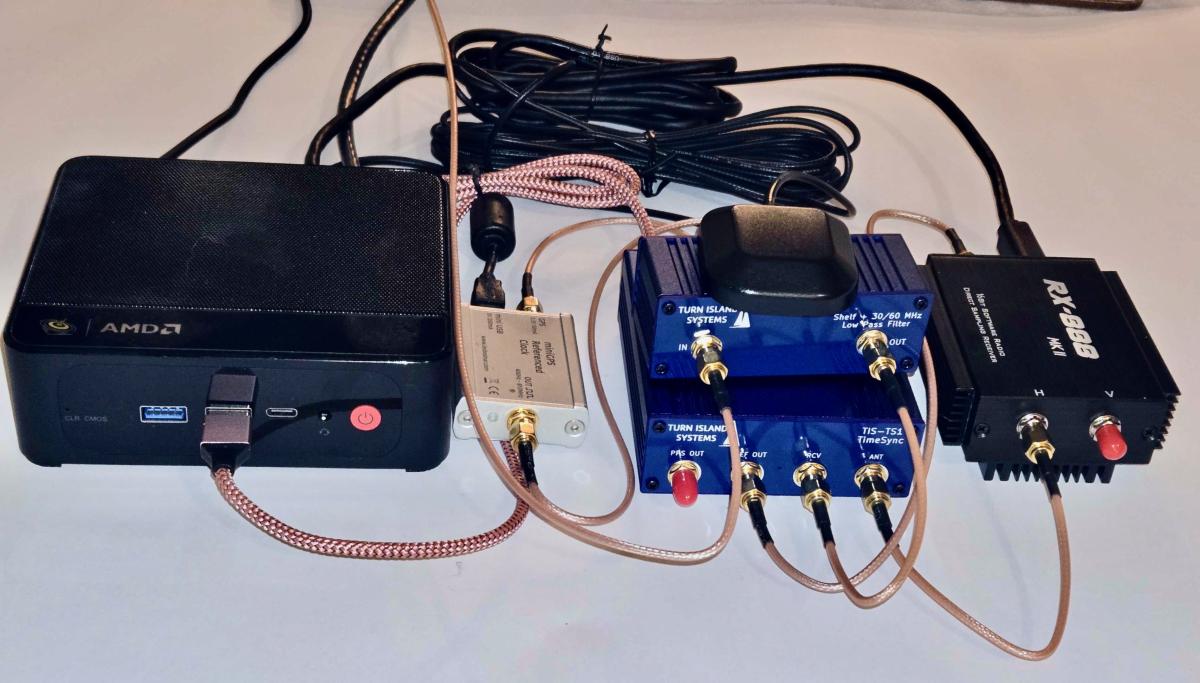
HamSCI Personal Space Weather Station HF Receiver (HFRx)
 
Sensor_in situe.pngLOGO - VLF Whistler Catcher Logo.jpg

HamSCI/TAPR Ground Magnetometer (GMag)


HamSCI VLF Whistler Catcher (VLF-WC)
 

V2-connected.jpg

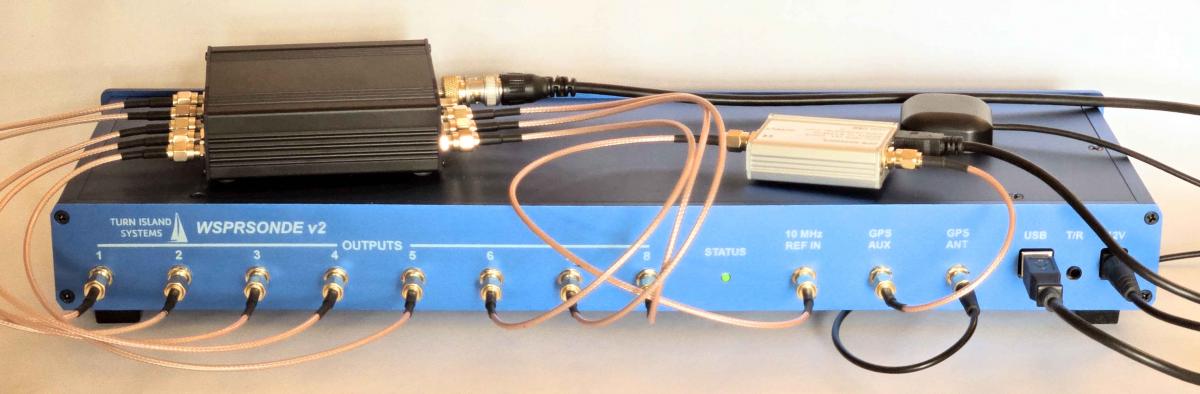
Turn Island Systems WSPRSonde (WS8)


Research Questions

The PSWS project is motivated by questions from both from the science and amateur radio communities:

Science Questions

  • How does the ionosphere respond to inputs from space and from the neutral atmosphere?
  • How does the ionosphere couple with the neutral atmosphere and with space?
  • What are the sources of medium and large scale traveling ionospheric disturbances?
  • What are the causes of Sporadic E?

Amateur Radio Questions

  • How do disturbances such as solar flares, geomagnetic storms, and traveling ionospheric disturbances affect radio wave propagation?
  • How does ionospheric science help amateur radio operators improve communications?
  • How can I make measurements in my own backyard that will help improve my amateur radio operations?

Further Information

Most terms and topics relevant to the PSWS can be explored via the Search Page here on the HamSCI website.  (The search function can be a bit buggy - if you receive an error message, reload and try again.) A few suggested links: 


hamsci_collaboration.png

HamSCI at 2026 NSF CEDAR Workshop

National Science Foundation and CEDAR logos

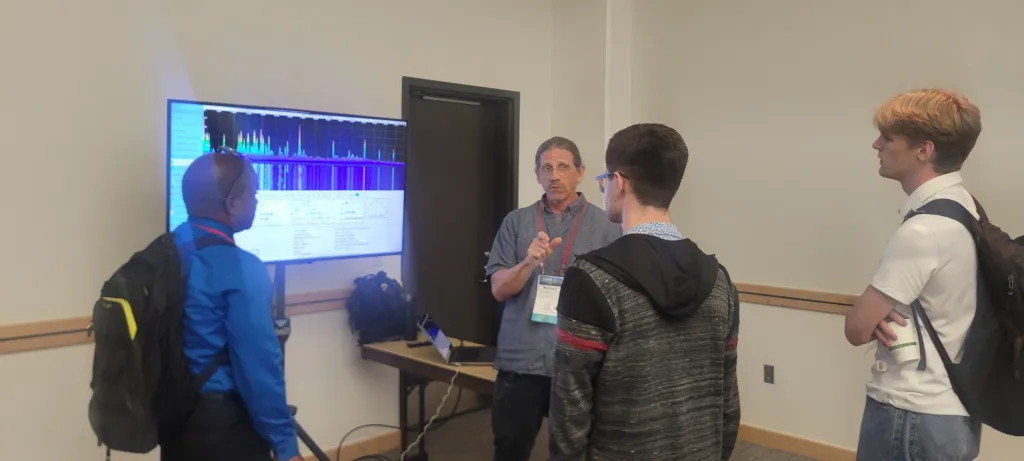
HamSCI was well represented at the Coupling, Energetics and Dynamics of Atmospheric Regions (CEDAR) Workshop, held 21-26 June in Des Moines, Iowa.

The NSF CEDAR Workshop provides the community an opportunity to self-organize, exchange and foster new ideas. It has a strong educational component.

The Workshop included community organized breakout workshops/sessions, poster sessions with a student poster competition, a student day, plenary sessions with science highlights, agency updates and tutorials, a distinguished lecture, and a prize lecture.

Three HamSCI community members spoke during the CEDAR Maker's Club breakout session, whose purpose is exchanging designs, code, operating procedures, and hacks useful for CEDAR experimental science:

Nathaniel Frissell — HamSCI Community (Nathaniel was one of the convenors for this workshop)

Michael Hauan — HF Receiver System

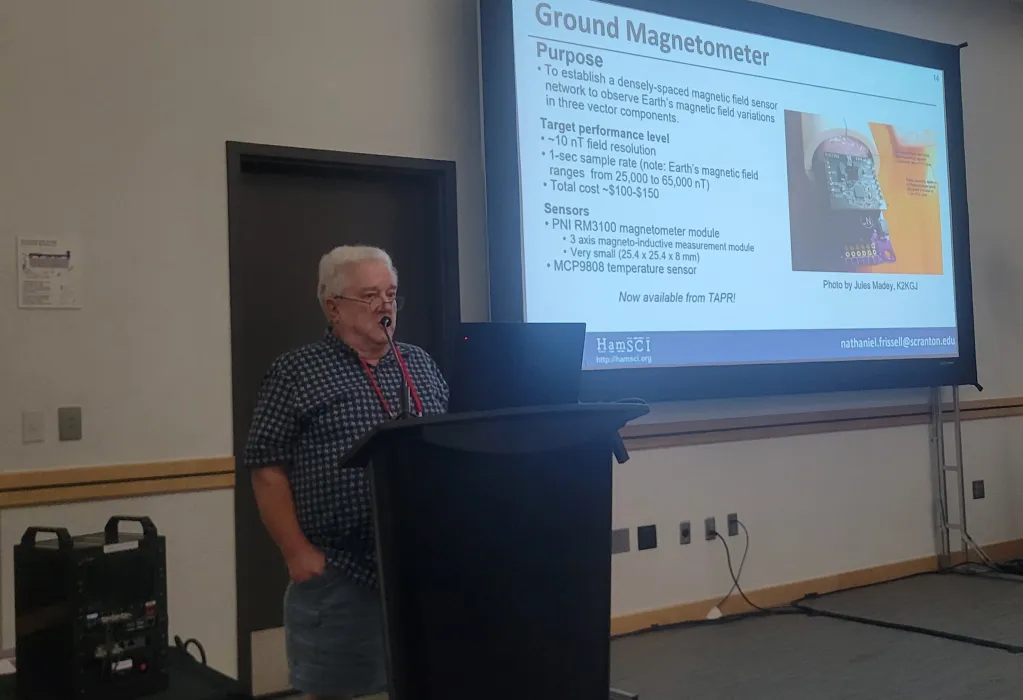
Dave Witten — Ground Magnetometer

Many posters were presented:

Andrew Rodland - A Diffusion-Based Machine Learning Model for Forecasting the Bottomside Ionosphere

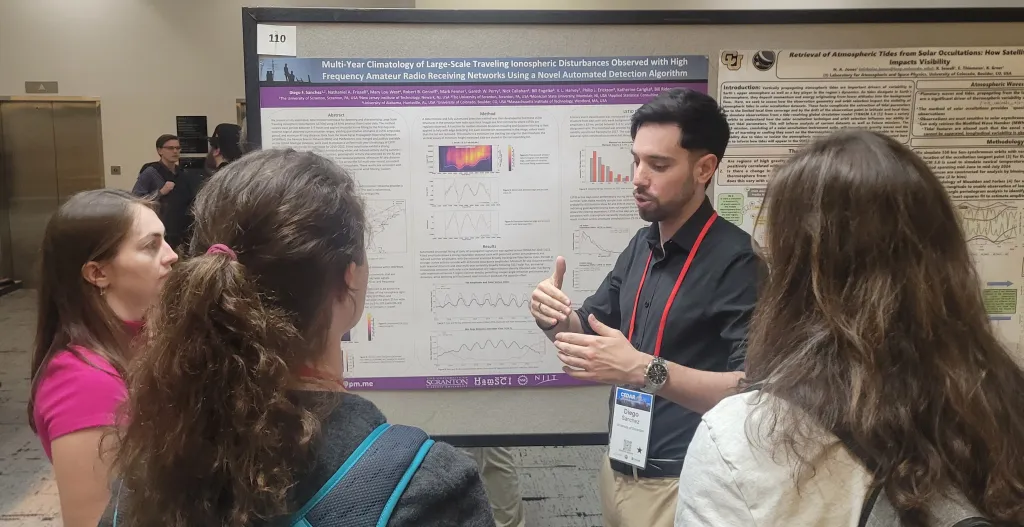
Diego Sanchez - Multi-Year Climatology of Large-Scale Traveling Ionospheric Disturbances Observed with High Frequency Amateur Radio Receiving Networks Using a Novel Automated Detection Algorithm

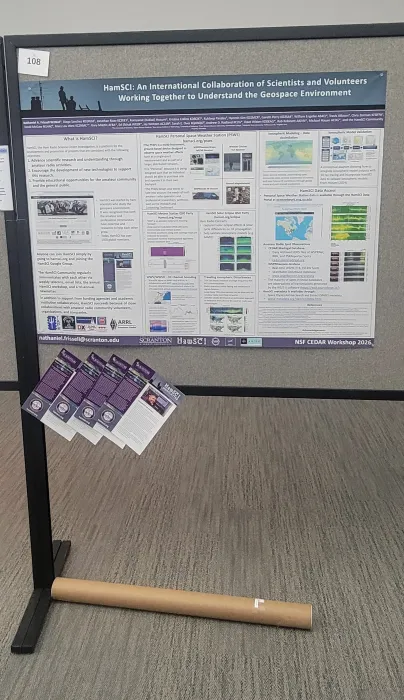
Nathaniel Frissell - HamSCI: An International Collaboration of Scientists and Volunteers Working Together to Understand the Geospace Environment

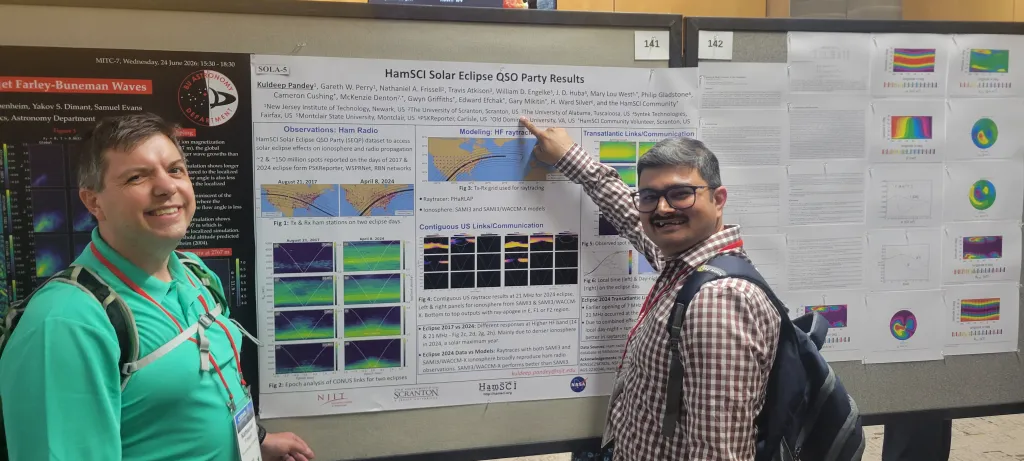
Kuldeep Pandey - HamSCI Solar Eclipse QSO Party Results


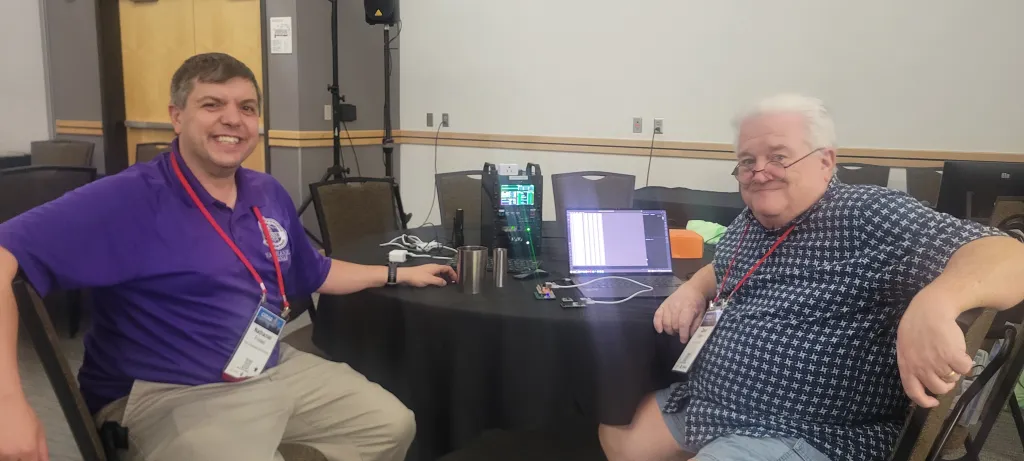
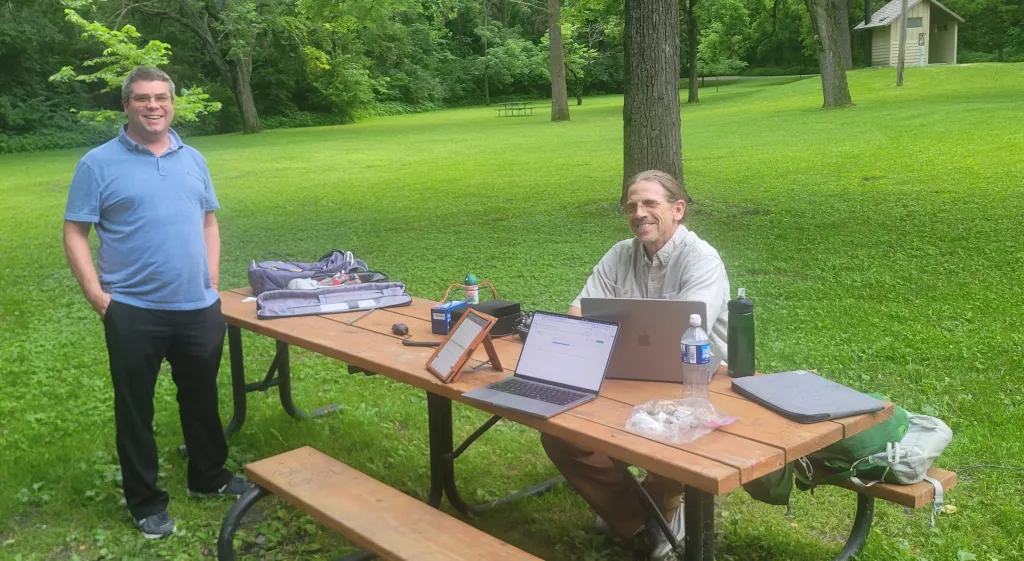
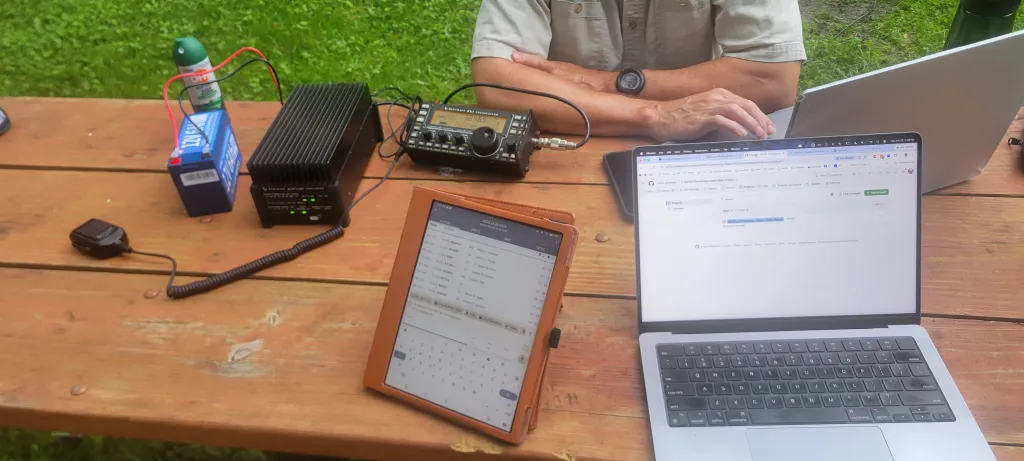
Outside of the Workshop agenda, Michael Hauan (AC0G) brought a portable ham radio station, where the group got on the air, making 2-way contacts from a local park - a popular ham radio operating activity known as 'Parks on the Air' (photos below).

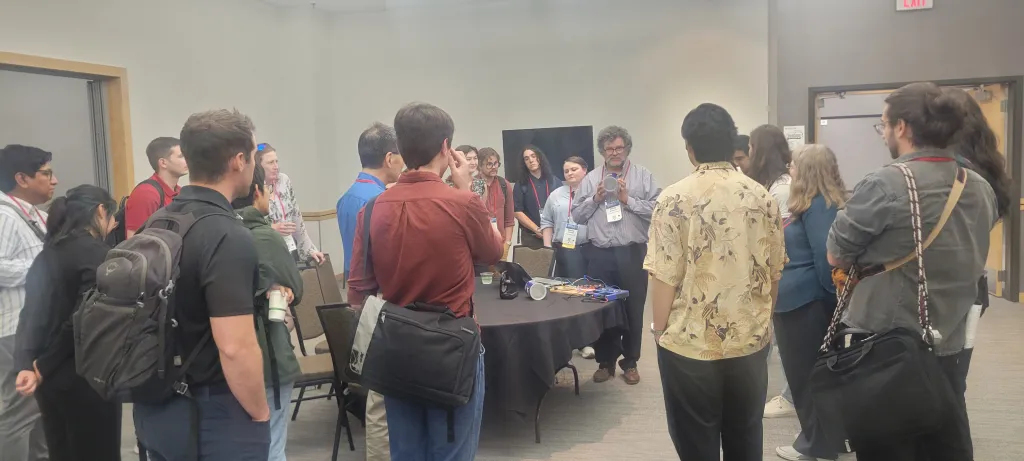
Aside from Nathaniel, Diego, Dave, Michael, Kuldeep and Andrew, also spotted was Phil Erickson (W1PJE) giving a hands-on lesson (radio-related, no doubt) to a large group of students.

Congratulations on a successful Workshop, and thanks for flying the HamSCI flag in front of a National Science Foundation supported audience!

About HamSCI Working Groups

What is a working group?

In professional contexts, a working group is a team of experts assembled to tackle a specific problem, develop a deliverable, or execute a project. The group generally follows a specific work plan and disbands once objectives are met.

For HamSCI, working groups are a way to enable researchers and citizen scientists to develop autonomous projects under the HamSCI umbrella. As our group has grown from a small workshop running short campaigns to a large group with numerous projects, it's no longer feasible for HamSCI's central leadership to take an active role in every project. It's also important for us to ensure that HamSCI projects can be led by amateurs, not just full-time scientists.


How can I join a working group?

Visit www.hamsci.org/working-groups and look for one that suits your interests. Depending on the nature of the working group, you may be able to join the mailing list directly, or may need to email the group leader and ask to join.


How can I propose a working group?

Email Kristina Collins KD8OXT ([email protected]) with the following required elements:

  • Full title of your working group
  • Official leadership
  • Group mission statement
  • Link to mailing list
  • Meeting information: a Zoom link for a regular meeting, a Google Calendar link, or a string like "Meeting announcements are sent out on mailing list"
  • Group photo (can just be a picture of whatever you're working on; a photo of lightning for a VLF group, for example)
If applicable, consider sending the following items as well: 
  • A science traceability matrix for the group (or a logic model/theory of change, if applicable)
  • A list of DOIs for relevant data repositories (datasets your group has posted to Zenodo, e.g.)
  • A list of DOIs for academic papers associated with your group
  • DOIs/links for posters published by your group
  • Any reference materials or getting-started guides you would like newcomers to become familiar with
  • Any additional materials you would like shared


How can I ensure that my working group will be effective?

Consider your mission. Some working groups, such as the K-12 Curricular Integration Group, serve as discussion groups for evergreen topics, while others, such as the Thru-Hole Grape Group, have a specific outcome in mind. What would have to happen for your working group to disband?

Follow the Heilmeier Catechism. If your working group revolves around a focused project, consider your answers to the questions of the Heilmeier Catechism:

  1. What are you trying to do? Articulate your objectives using absolutely no jargon.
  2. How is it done today, and what are the limits of current practice?
  3. What is new in your approach and why do you think it will be successful?
  4. Who cares? If you are successful, what difference will it make?
  5. What are the risks?
  6. How much will it cost?
  7. How long will it take?
  8. What are the mid-term and final “exams” to check for success? 

Distinguish between outcomes and outputs. Outcomes, as discussed above, are the goals of your working group: things that occur which would not have occurred if you had not convened and worked together. Outputs are publications, datasets, and products. It's important to record these (we recommend uploading reports and datasets to the HamSCI community on Zenodo) so that others can follow your work and build upon it in the future. For example, if your working group's task is to organize a data campaign, the activity would be the campaign itself, the data collected would be an output, and the scientific analysis of that data would be the outcome.

Let your meeting schedule suit your group's needs, not the other way around. You may assume that your working group will be best served by a weekly or biweekly meeting, but this is not always the case. It's perfectly acceptable to set a meeting schedule of "once a year at Hamvention" or "on Zoom as needed." 

Reach out if your project needs resources. Funding to support your project may be available through ARDC, NASA, the National Science Foundation, and other sources. If you would like assistance in applying for funding to support your project, fill out the Heilmeier Catechism above and reach out to HamSCI's full-time scientists. We can help you determine if your project is likely to be funded and navigate the hidden curriculum of applying for a grant.


How does HamSCI leadership ensure that working groups remain effective?

Working group topics must be approved by scientific leadership at HamSCI. (We aren't here to gatekeep; we just want to verify that new topics aren't redundant or pseudoscientific.) Each year at the HamSCI Workshop, we check to verify that all working groups on the books have shown some activity over the previous year. Those which have not will be archived or reorganized. Over time, we track the progress of working groups. 

HamSCI 2027

HamSCI Logo High Quality.png 

Workshop 2027

April 17-18, 2027

At the University of Scranton


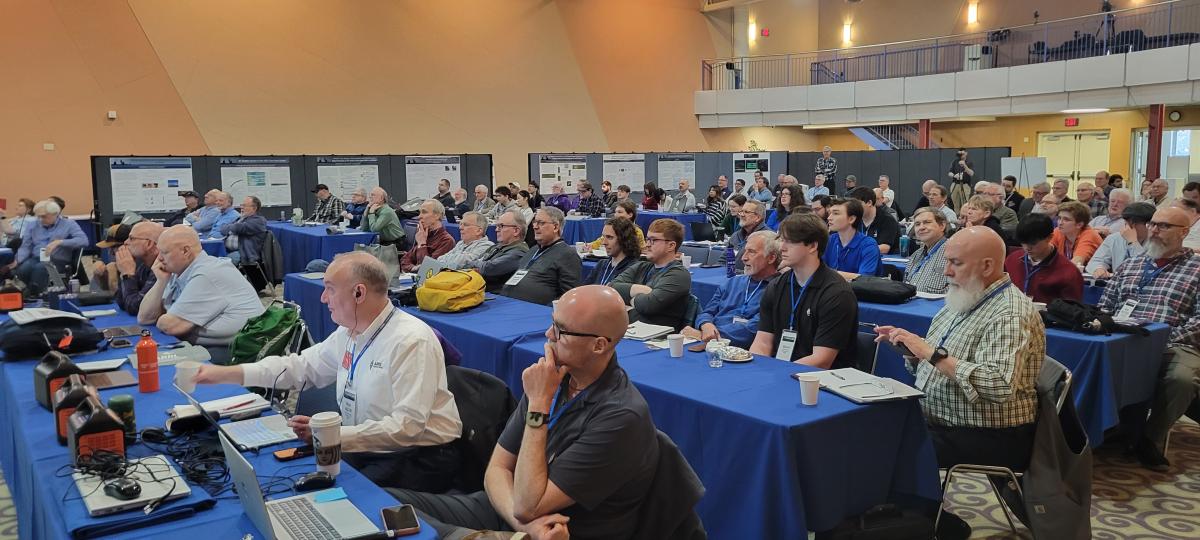
HSW 2026 Audience.jpg
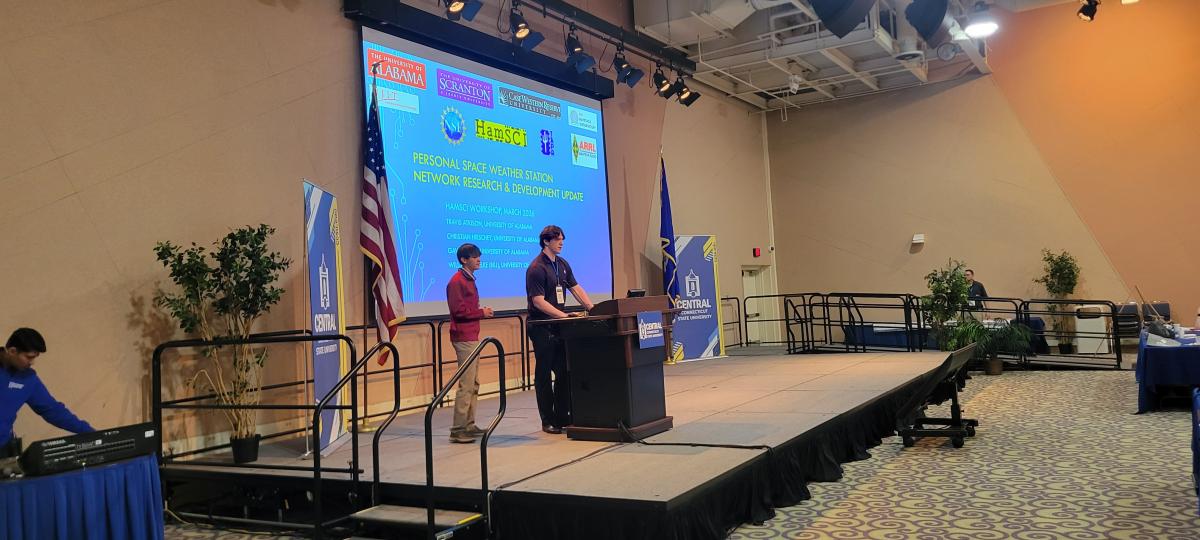
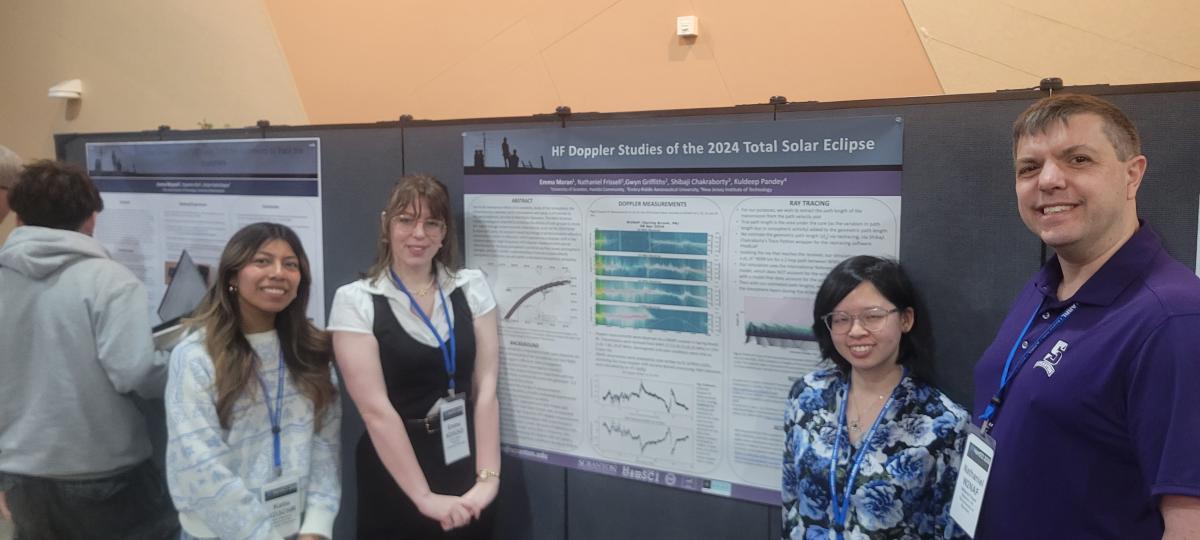
HSWS 2026 Talks.jpg HSWS 2026Posters.jpg

Photos from the 2026 Workshop, held in Newington, CT (photos courtesy of W2NAF)


scranton.jpg

scranton_nsf_nasa_ardc.png


\

An Atlas of HamSCI’s PSWS Doppler Spectrograms

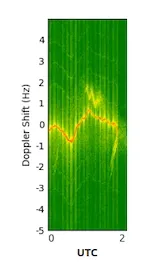
Have you ever wondered how to interpret the Doppler shift spectrograms generated by Personal Space Weather Stations, eg Grape 1s, Grape 1 DRFs, Grape 2s, HamSCI High Frequency Receivers?  Wonder no more, as a team of skilled HamSCI volunteers has assembled an 'Atlas of Forms', showing examples of ionospheric phenomena as seen in Doppler shift spectrograms:  Read the Docs Atlas of Spectrograms

Many readers may wish to begin with the first topic, The Ionosphere and HF Propagation.

Following that, make your way through the well organized, easily navigated ReadThe Docs page, and you'll find PSWS spectrograms and explanations for the following propagation modes and PSWS use cases:
  • Surface (ground) waves between WWV and a nearby PSWS
  • One-hop E-Region
  • Sporadic E (Es)
  • One-hop F-Region
  • Two-hop F-region Side Scatter
  • Prolonged Two-hop F-region Side Scatter
  • Dawn Doppler
  • Traveling Ionospheric Distrubance
  • Sudden Ionospheric Disturbance (SID) and Doppler Flash
  • Solar Eclipse Effects
  • BPM (Time & frequency station in China) Reception
  • High and Low Ray (take-off angle) 
  • Geomagntic Storms
  • ..and more!

Scientific jargon is kept to a minimum, so this is truly information for all who have explored, deployed or otherwise taken an interest in HamSCI's various Personal Space Weather Station projects and campaigns. This work grew from a poster presented at the 2026 HamSCI Workshop in Newington, CT.

The community owes a dept of gratitude to Bob Mattaliano N6RFM, Gwyn Griffiths G3ZIL, Dave Swartz W0DAS, Mary Lou West KC2NMC, and Gary Mikitin AF8A. Special credit to Gwyn for creating the Read The Docs style repository!


HamSCI General Statement on CHU

    The Ham Radio Science Citizen Investigation (HamSCI) wishes to emphasize the significant scientific value of National Research Council (NRC) Canada’s time standard HF radio beacons at station CHU in Ottawa. NRC Canada recently announced a plan to cease CHU operations on 22 June 2026. As active scientific users of CHU’s signals, we urge the NRC to reverse this decision.  

By way of introduction, HamSCI provides an active platform for citizen and professional scientific collaborations that advance research and understanding of near-Earth space dynamics and space weather through amateur radio activities. HamSCI encourages the development of new technologies and methods for advanced radio-based remote sensing.

Through its provision of a strong, time-standards locked, and highly-coherent HF radio beacon source, CHU provides a unique and valuable remote sensing capability for Canadian and international space science that is not replicated by other professional networks.  CHU signals, as they propagate toward ever-expanding radio receiver networks distributed across the US and Canada, experience significant variations in frequency, amplitude, and phase.  These variations are driven by the large complexities of ionospheric dynamics in both the subauroral and auroral ionosphere.  Remote sensing of the behavior of these variations allows better understanding of their physical drivers, and advances space weather knowledge with direct benefits for both Canadians and the international geospace research community. 
AC0G-MO_14.67MHz.png

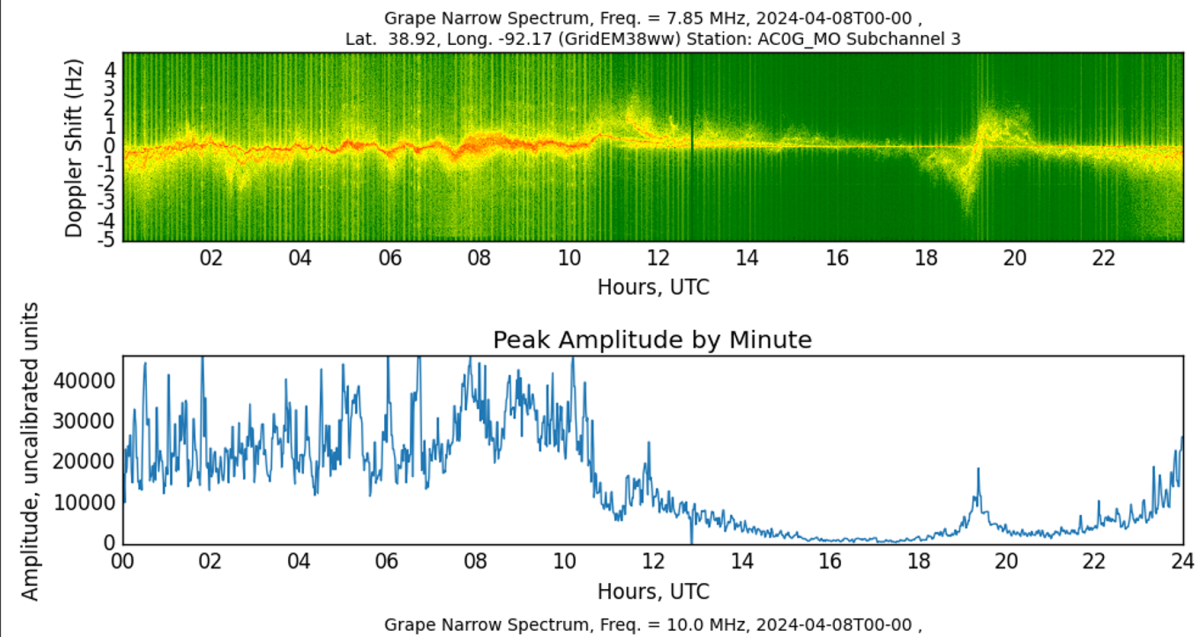
Large anomalous variations in the frequency spectrum (upper panel) and amplitude (lower panel) of CHU signals as received in the US as received by citizen scientist Michael Hauan AC0G-MO in the state of Missouri during the total solar eclipse of April 8, 2024. A clear s-shaped variation in apparent frequency of CHU, triggered by the eclipse, occurred at about 19 UTC.  The shape of the curve near that time, and the temporary increase in received signal amplitude, provides unique remote sensing information on upper atmosphere thermal and chemical variations during the passage of the eclipse shadow.


CHU is in daily community science use as a technical enabler of advanced remote sensing

    The use of time standard beacons as ionospheric signals of opportunity dates back more than a century to the earliest days of radio science. Today, this time-tested approach is supercharged by inexpensive single-board computers, software defined radios, and the participation of the global amateur radio and shortwave listener community, who have built a growing meta-instrument that spans the continent of North America and points beyond. 

    HamSCI’s implementation of this advanced remote sensing technique takes the form of its flagship project, the Personal Space Weather Station Network (PSWS).  PSWS efforts have collected over 25000 observations of CHU’s signals to date. Each day, some 40 software-defined radio stations distributed throughout the world archive all three of CHU’s signals and upload them to a central database. These signals provide important information alongside the signals of US operated time stations WWV and WWVH, and generate valuable data for the improvement of ionospheric raytracing with benefit to commercial transionospheric communications systems. The network is poised to grow further this summer, as twenty additional PSWS nodes are deployed around the United States with support from the US National Science Foundation. 


Having begun experiments in 2019 and continuing to add stations in following years, HamSCI seeks to build a propagation record that encompasses Solar Cycle 25 and its wide variety of geophysical variability. These results have a direct impact on the development of improved, practical ionospheric raytracing algorithms and on applied research focusing on the radio propagation impacts of solar flares.

At a larger scope, other citizen science teams such as Aurorasaurus continue to work closely with HamSCI for studies of the interactions between aspects of the geospace system. These studies greatly benefit from multiple distributed ionospheric observations including CHU enabled remote sensing.

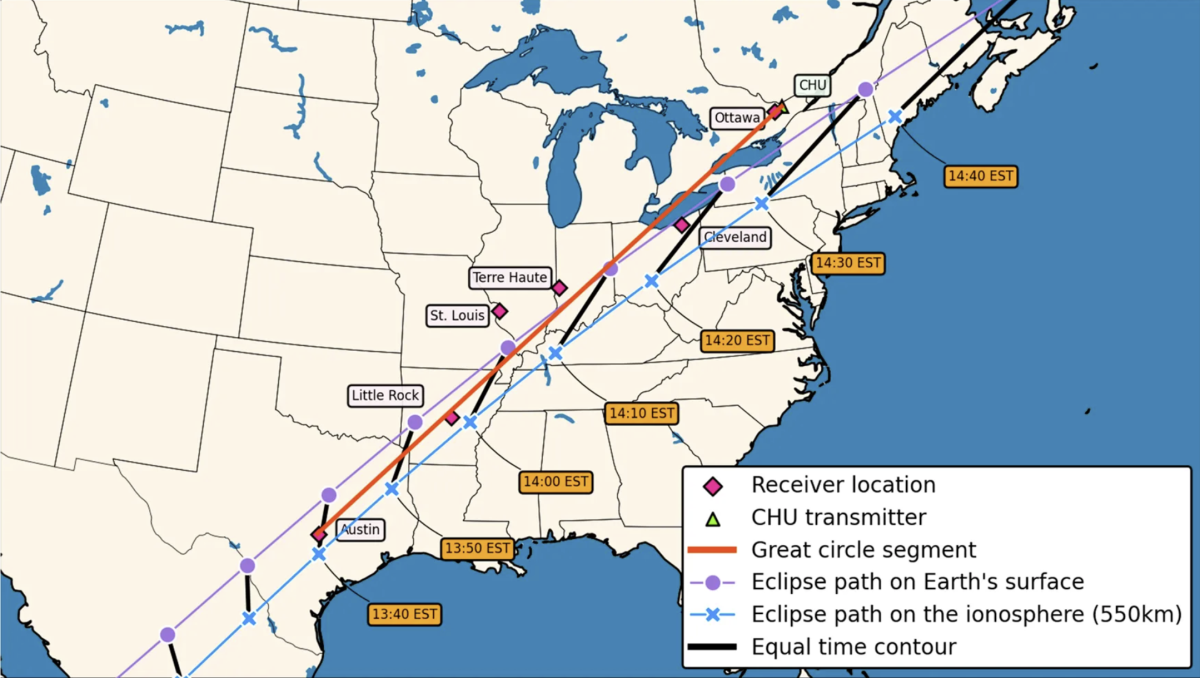
    Recently, CHU played a crucial role in a first-of-its-kind citizen science remote sensing campaign along the path of the 2024 total solar eclipse traversing North America, as described in Usis et al 2025. Receivers built by undergraduate students were deployed and maintained by citizen scientists along the eclipse path from Ottawa to Austin, including high school students and members of the Radio Amateurs of Canada, with a goal of monitoring the effect of the eclipse on the radio propagation of CHU’s second ticks. No other time standard station could have fulfilled this role in the same manner and with the same unique spatial sampling of upper atmospheric variations triggered by eclipse passage. The CHU eclipse campaign was a triumph of frontier citizen science: a co-designed campaign that produced high-quality open science results, with all participants engaged in the full scientific process and recognized through coauthorship. The first author, M. Usis, further extended this work beyond the above reference to a full masters thesis in 2025. 
CHU_eclipse_map.PNG


Other members of the HamSCI community actively use CHU as a propagation beacon for frontier, independent research projects as well.  For instance, Gwyn Griffiths MBE G3ZIL, observing at long distances from the UK, uses CHU to quantify propagation effects during solar flare disturbances in ionization production within the upper atmosphere.  This research is particularly important as well for transatlantic HF propagation studies, as CHU provides a signal that is less affected by geomagnetic disturbances than those from WWV.  CHU’s favorable location also greatly mitigates the problem of isolating the transmitter location as opposed to other international time signal broadcast locations.  

Professor Christopher Stubbs AB1WN, leading a team at Harvard University, uses combined observations of CHU and WWV to assess details of radio wave polarization effects imposed by the ionosphere. Professor David Kazdan AD8Y at Case Western Reserve University has conducted daily time-of-flight measurements using CHU's second tick as a reference for several years.  These data contain numerous scientific quality phenomena ranging from ionospheric disturbances to possible meteor scatter in the recordings.  The team at CWRU plans further ionospheric eclipse measurements in August of 2026 to study ionospheric physics and chemistry transient responses, which are directly indicative of space weather reaching into Canadian provinces.


CHU enables frontier scientific observations of complex space weather

    Beyond HamSCI activities, CHU is valuable for a range of international scientific studies in geospace regions. Geospace’s field of study by definition crosses international boundaries, and the study of high-latitude regions and the aurora, a key component of the complex transfer of energy throughout the geospace system, is particularly relevant for Canada as a northern nation. The complexity of this system, its natural variability, and its response to geomagnetic storm activity is particularly intense both north and south of the CHU transmitter complex operated by NRC in Ottawa, as it lies within the plasmasphere boundary layer.  This geophysical region is marked by a huge number of not-yet fully characterized instabilities and variations as cold, dense plasma from lower latitudes overlaps the hot, more tenuous plasma of the mid-latitude ionospheric electron density trough and high latitude auroral regions.  Geospace community scientists are still working on understanding the fundamentals of this system and its behavior, and the situation remains data-starved. 

Understanding space weather is also an increasingly imperative societal need for all nations including the North American continent in the modern era, as commercial use of near-Earth space by large satellite constellations grows at a highly accelerated pace.  CHU transmissions provide valuable information for advancing crucial fundamental and applied understanding of the planet’s surrounding charged and neutral atmosphere, which forms the background environment for low Earth orbit satellite networks and their operations.


Summary: CHU should continue its enabling transmissions for ionospheric space weather understanding

In the end, the loss of CHU will invariably - and significantly - impact unique remote sensing data that instrument networks return daily, and this data has significant and proven scientific yields for study of the upper atmosphere and its dynamics.  For this reason, we can say with certainty that the global community of citizen and professional scientists alike will be poorer for its silence, if current NRC plans are made a reality.  

Therefore, we strongly recommend the continuation of CHU’s signal for the benefit of many Canadian and international scientific research projects and space weather studies targeting the complexities of Earth’s atmosphere.


Signatories

† = HamSCI Science Advisory Board
* = Canadian Citizen or Resident


Dr. Philip J. Erickson W1PJE. Director, Massachusetts Institute of Technology (MIT) Haystack Observatory, Westford MA  USA.Principal Research Scientist, MIT, Cambridge MA  USA. Co-chair, Panel on the Physics of Ionospheres, Thermospheres, and Mesospheres, US National Academies of Science, Engineering, and Medicine (NASEM) Decadal Survey for Solar and Space Physics (Heliophysics) 2024-2033

Prof. Nathaniel Frissell W2NAF. Associate Professor, Physics and Engineering, University of Scranton, Scranton, PA  USA.
HamSCI Principal Investigator.

Dr. Kristina Collins KD8OXT. Research Scientist, Space Science Institute, Boulder, CO USA.
Lead, WWV/H Scientific Modulation Working Group.

Travis Atkison, Ph.D. Associate Professor of Computer Science, Cyber Security Program Director, The University of Alabama, Tuscaloosa, AL USA.

Dr. Ethan Miller. Principal Scientist, STR, Beavercreek, OH USA.

Gary Mikitin AF8A. BSEE (retired). HamSCI Amateur Radio Community Coordinator, Cleveland, OH USA.

Dr. Mary Lou West, Physics and Astronomy Department, Montclair State University, Montclair, NJ USA.

William Liles, NQ6Z. Liles Innovations LLC, Reston, VA USA.

H. Ward Silver, N0AX. Missouri University of Science and Technology, Rolla, MO USA. Contributing Editor (ret.), ARRL Handbook and ARRL Antenna Book.

Prof. Gareth Perry*
 KD2SAK, New Jersey Institute of Technology, Newark, NJ USA.

Nick Hall-Patch* VE7DXR, Victoria, British Columbia.

Dr. Pierre Fogal*, Senior Research Associate, Dept. of Physics, University of Toronto. Site Manager, Polar Environment Atmospheric Research Laboratory (PEARL), Canadian Network for Detection of Atmospheric Change (CANDAC)

29 May 2026
 

K-12 Curricular Integration

Leader
Ed WX2R (pro tem)
Mission Statement

The objective of this project is to inspire the next generation of scientists, engineers, and students by deploying HamSCI supplied personal space weather stations into schools, colleges, and related educational institutions. This pilot project will focus on extra-curricular activities in high schools.
Through hands-on data collection, real-time monitoring, and collaborative analysis of solar activity, geomagnetic storms, auroras, and ionospheric conditions, we look to create active laboratories of discovery. cultivating a deeper understanding of our dynamic relationship with the Sun and its effects on Earth.
By placing these tools directly into the hands of students and educators, we hope to foster student curiosity, promote STEM literacy, create global data-sharing peer networks with scientists while developing and growing the amateur radio community in the process.

Thru-Hole Grape

Leader
Bob Reif W1XP
Mission Statement

This working group is developing a thru-hole version of the Grape receiver for use in education and to maintain long-term support of the system. For more information, contact Bob W1XP.

Eclipse Working Group

Mission Statement: The Eclipse Working Group runs eclipse campaigns and analyzes data from eclipses. 

Leader
Kuldeep Pandey

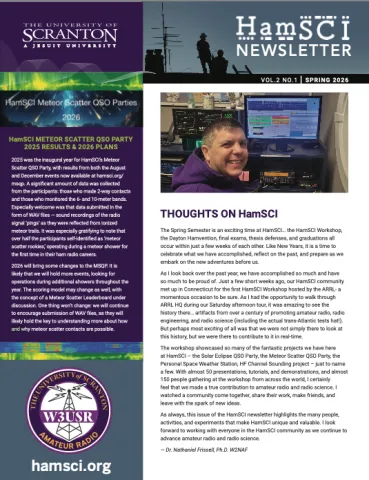
HamSCI Newsletter Volume 2, Number 1 Published

Just in time for distribution at the Dayton/Xenia Hamvention, the Spring, 2026 issue of the HamSCI Newsletter has been published, available on the HamSCI website's Newsletter Page.  Topics include:
The 2026 HamSCI Workshop
Scientist Profile:  Kuldeep Pandey
HamSCI Literature Review: Heliophysics Big Year
Amateur Profile:  Normand Juneau VE2DVG
Contributor Column:  Cream in Your Coffee?
Staff Profile:  Emma Moran KD3CKD
News on the Meteor Scatter QSO Parties, Collaboration with the Indian Lightning Detection Network, Accolades given at the Orlando Hamcation...and more!
 
Thanks to the hard working Newsletter Editorial/Production Team:  Ed Efchak WX2R, Mary Lou West KC2NMC, Vikki Lawhon (University of Scranton), and to all of the contributors and reviewers!

Whistler Catcher - Overview, Sourcing

LOGO - VLF Whistler Catcher Logo.jpg

Overview

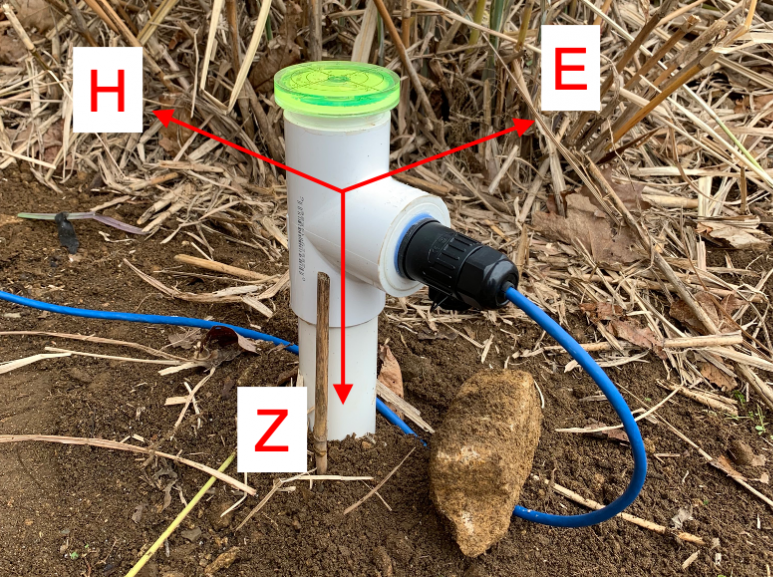
The Whistler Catcher VLF Reception System is a very low frequency software defined radio (VLF SDR) system. It utilizes an open hardware, open software, and open data design and philosophy to facilitate and promote citizen science in the study of VLF phenomena; including the Earth's natural radio emissions, VLF amateur radio transmissions in the 8270 Hz and 5710 Hz bands, and lightning stroke location.  It is one component in the HamSCI Personal Space Weather Station (PSWS).

The system consists of both hardware and software. The hardware consists of VLF Active Antenna along with a VLF interface box to supply power and interface the signal; a GNSS interface box to provide a pulse per second (PPS) signal for the purposes of frequency calibration and timestamping; a Behringer UMC202HD USB audio interface for data acquisition, and a thin client PC with serial port. The designs of the VLF Active Antenna, VLF Interface Box, and GNSS Interface Box are all open hardware. The software includes vlfrx-tools, an open source software toolkit primarily for the application of VLF signal capturing, calibration, timestamping, filtering, storage, live listening, retrieval, visualization, EbNaut amateur mode decoding, and other signal processing functions in over 40 individual program utilities. It was written by Paul Nicholson G8LMD [SK], a passionate VLF enthusiast to which the Whistler Catcher VLF Reception System is dedicated to.

Sourcing

More information on the Whistler Catcher VLF Reception System will be added soon. If you are interested in becoming a host for the Whistler Catcher VLF Reception System, please see the VLF site specific hosting requirements below, followed by a link to the Interested Host Form here on the HamSCI website. If you have questions and/or would like more information, we suggest that you join the hamsci-psws Google Group and post inquiries there.

VLF Site-Specific Hosting Requirements

VLF reception, especially at the very, very low frequencies involved (5 and 8 kHz bands) is much, much different than reception on broadcast frequencies (medium wave, shortwave, VHF, UHF, etc.).  Practical experience leads to the following siting requirements.  Ideally, every VLF Whistler Catcher active antenna would conform to all of these conditions, though, in reality, compromises are inevitable.  HamSCI would be glad to discuss the reasons behind these requirements, and if/when they can be relaxed.

  • 200 ft separation from above/below ground aerials, wiring, ground wires to a home or other source of mains harmonics (same as magnetometer considerations, see above)
  • should be at least 30 ft away from a tree's farthest overhanging branch
  • cannot be installed in brush, bushes, or under trees, but tall grasses are acceptable
  • should have an earth ground connection at all times
  • open fields are usually the best locations if the above conditions could be satisfied.

HamSCI Support:  HamSCI has been awarded a grant from the National Science Foundation to fund up to thirty (30) complete PSWS (HamSCI HF Receivers + Ground Magnetometers + VLF Whistler Catchers). In 2026, HamSCI be will selecting locations based on an application review process, with a goal of siting thirty systems at scientifically advantageous locations across North America.  If you are interested in being considered as a PSWS host, please navigate to the Searching for Instrumentation Sites page, review the site selection criteria, and if you feel you qualify, complete the Interested Participant Form at the bottom of the page.  There's also a button to submit questions to the project team.  The actual ship date for the first units is yet to be determined...if all goes well, Q3 and Q4, 2026.

VLF Whistler Catcher Reference Documents, Images, Diagrams

Further Information

Credits

  • The circuit, PCB, and case of the GNSS Interface box was designed in conjunction with Paul Elliott WB6CXC of Turn Island Systems. Paul's efforts were donated to the project.
  •  Dr. Nathaniel Frissell, W2NAF, was the Principal Investigator on National Science Foundation grant 2002278 ('Collaborative Research DASI Track 1 - Personal Space Weather Station').   Their efforts were supported by additional NSF grants (19229721932997) and the institutions noted below.

In Memoriam

Paul Nicholson

The HamSCI Whistler Catcher VLF Reception System is completely and solely dedicated to Paul Nicholson G8LMD [SK], a passionate VLF enthusiast whose contributions to this project and the VLF Community are innumerous. Paul pioneered VLF reception techniques at home for the VLF Community which allows the VLF radio amateur, student, researcher, and anyone else who is passionate and interested to produce science-grade data and observations of VLF phenomena. Paul’s biggest contribution, in addition to VLF reception techniques, is vlfrx-tools, an open-source tool kit of 48 individual utilities that allows the use of high-quality commodity hardware and GNSS receivers to make these high-quality, science-grade observations of VLF phenomena, including automated detection of whistlers and dawn chorus, a mains hum tracking filter, and sferic time of group arrival  for lightning location calculation. Paul’s other biggest contribution, the hardware and software for the Indian Lightning Detection Network (ILDN), is the biggest inspiration of this project. Paul’s contributions simply cannot be understated, and this project’s goal is to not only continue Paul’s work, but to make the world a better place because of it, as Paul always did.

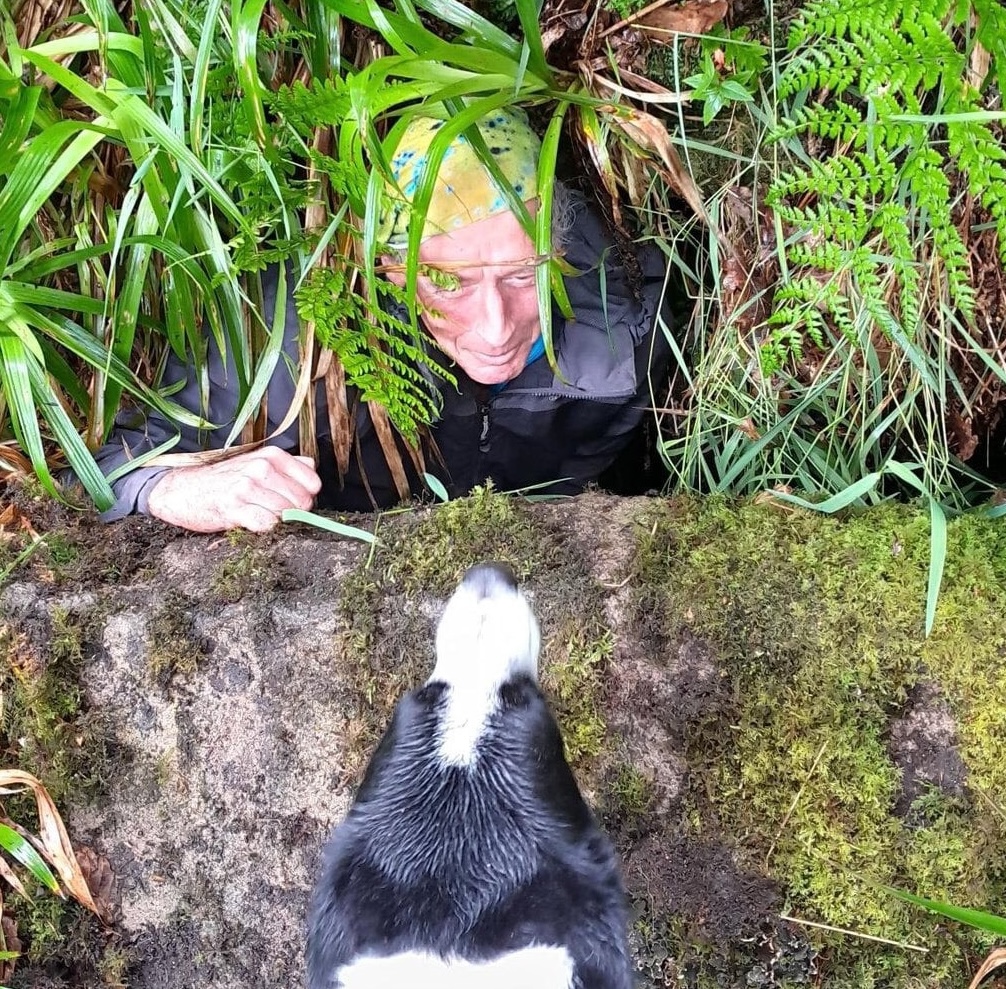
Paul also was selflessly involved in other endeavors, including serving as the chairman of the board and treasurer of the Gaddings Dam group whose purpose is to maintain and preserve Gaddings dam in Todmorden, England. Paul also loved dogs and served as a dogsbody (being a dogsbody involves hiding yourself in inconspicuous places outside to train the search and rescue dogs) for the Calder Valley Search and Rescue Team.


hamsci_collaboration.png

3 July 2026:  Third Draft

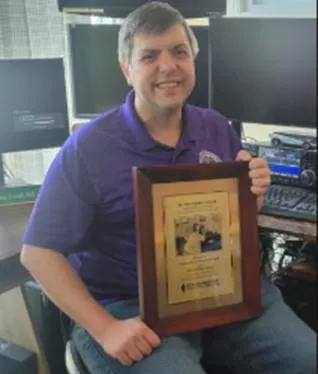
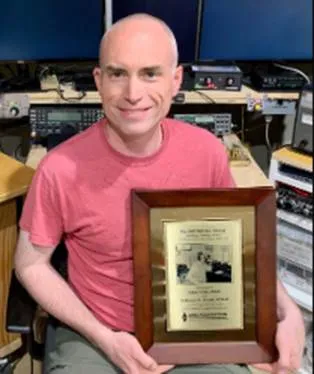
Drs. Miller and Frissell Share Award for Technical Writing

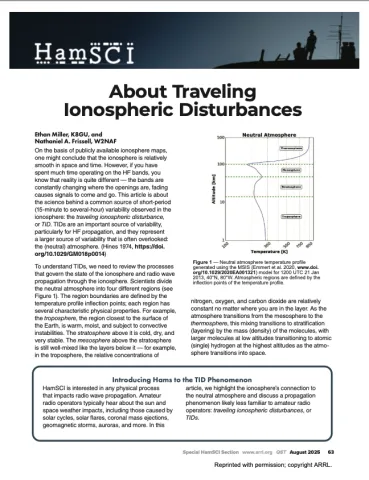
The ARRL Foundation’s 2025 Bill Orr, W6SAI*, Technical Writing Award has been awarded to Dr. Ethan Miller, K8GU, and Dr. Nathaniel A. Frissell, W2NAF, for their August 2025 QST article, “About Traveling Ionospheric Disturbances.”  Their article (QST0825 Miller-Frissell About TIDs.pdf ) was prominently featured in that issue of QST, which featured HamSCI on the cover as well as in a special section.

The Bill Orr, W6SAI, Technical Writing Award is awarded on a yearly basis to the QST author or authors who write an outstanding QST article on new or existing technologies (or methods or means of amateur communication). The article should be written in an easily understood style, worthy of the Bill Orr "stamp of approval" - it should encourage interest and expand the knowledge and understanding of amateurs who may not have a strong technical background.
 
Miller and Frissell have a long history of collaboration, including work above the Arctic Circle, where they jointly installed and calibrated research equipment over a decade ago.  They have shared author/co-author status on many papers detailing space weather and propagation research.
 
*William I. Orr, W6SAI, was an engineer, educator, and communicator of extraordinary ability. Over a period of 40 years, he wrote and edited scores of technical books and articles of interest to amateur radio enthusiasts. His topics ranged from basic electronic theory to microwave communications and the theory, design, construction, and magic of antennas. Whether explaining electronic theory or the intricacies of a microwave amplifier for EME communications, Bill had the ability to use a simple, plain language. He wrote about technical subjects in a way that naturally attracted amateurs who had an interest in the topic but lacked a technical background in the area.

[Photos courtesy of the award winners, and permission to post the QST article gratefully provided by the ARRL, The National Association for Amateur Radio©.  Original story by the ARRL]


HamSCI at Hamvention 2026 - Schedule and Map
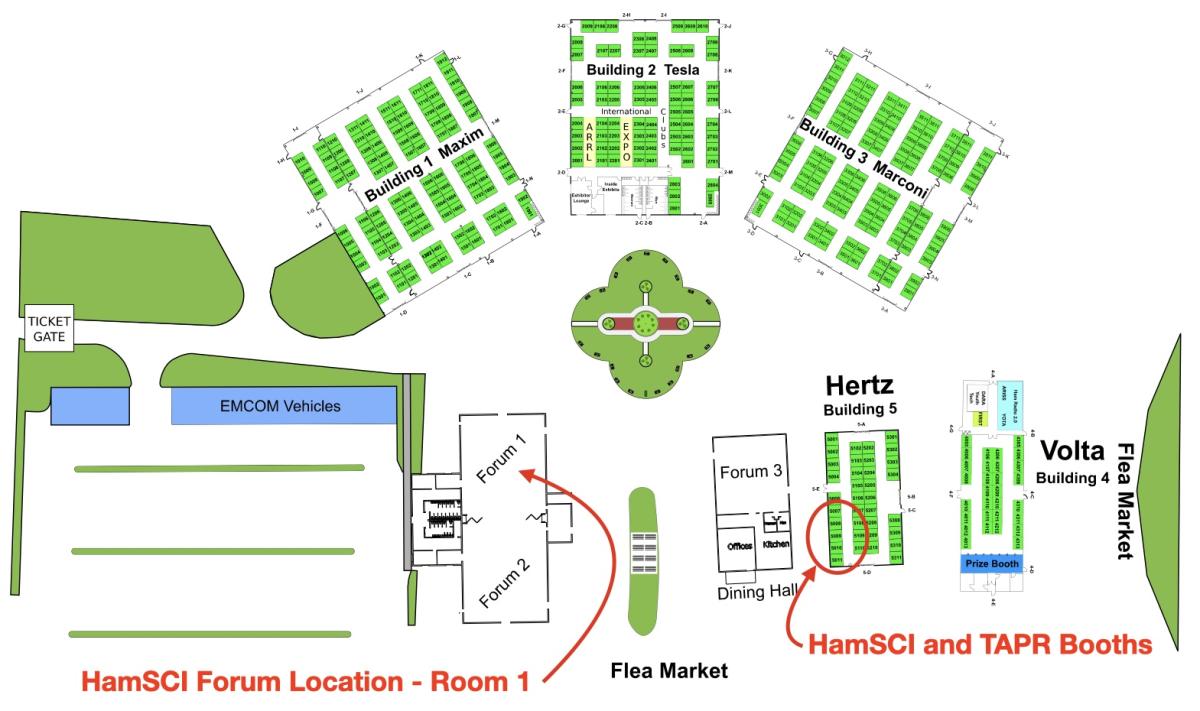
 

HamSCI will have a major presence at the 2026 Dayton Hamvention, to be held in Xenia, Ohio May 15-16-17, 2026 at the Greene County Fairgrounds. Hamvention is the world's largest ham radio gathering, recently welcoming over 30,000 attendees per year. The Hamvention, sponsored by the Dayton Amateur Radio Association (DARA), is an extremely important event for engaging with the amateur radio community, sharing ideas, developing collaborations, and sharing scientific results.

The Hamvention 2026 theme is Radio Adventurebecause radio has always been about exploration — of ideas, technologies, distances, and possibilities. From the earliest spark-gap pioneers to today’s digital experimenters and citizen-scientists), amateur radio continues to be a gateway to discovery. HamSCI will be hosting booths 5007 and 5008 (next to TAPR in Building 5, the Hertz Building), and hosting the HamSCI Forum, early on Friday morning. Support for the 2026 HamSCI Hamvention activities comes from The University of Scranton, the Yasme FoundationTAPR, the National Science FoundationNASA, and volunteers like you. 

As always, we welcome HamSCI booth volunteers.  As a volunteer, we ask that you be present in the HamSCI booth as your schedule permits, welcoming visitors, talking with them about HamSCI in general, HamSCI projects and your specific research interests. Feel free to bring demonstration items and materials and to talk about what you know best. The goal of HamSCI is to connect ham radio with scientific research. So, any topic that supports this goal is a good topic to discuss.  The booth uniforms, are, by tradition, HamSCI labcoats.  The 2026 HamSCI Booth Volunteer Page is up!

HamSCI Forum  

Date & Time Sponsor/Venue Title Presenter(s) Organization Home QTH(s)
Friday, May 15th
9:15 AM
HamSCI-50x11.png
Forum Room 1
Opening Remarks from HamSCI's Founder Dr. Nathaniel A. Frissell, W2NAF University of Scranton Scranton, PA

Friday, May 15th
9:25 AM

HamSCI-50x11.png
Forum Room 1

A Grape 1 HamSCI Receiver Build Project for Education and Science Bob Reif, W1XP   HamSCI-50x11.png Groton, MA
Friday, May 15th
9:45 AM
HamSCI-50x11.png
Forum Room 1
Meteor Scatter QSO Party 2025 Results and Plans for 2026

Gary Mikitin, AF8A

HamSCI-50x11.png

Cleveland, OH

Friday, May 15th
10:05 AM
HamSCI-50x11.png
Forum Room 1
NASA CINEMA/MOVIE: An Opportunity for Amateurs to Participate in NASA Ionospheric and Magnetospheric Physics

David McGaw, N1HAC

Dartmouth College Hanover, NH
Friday, May 15th
10:25 AM
HamSCI-50x11.png
Forum Room 1
Solar Eclipse Through Ham Radio: What the Bands Revealed Dr. Kuldeep Pandey New Jersey Institute of Technology Newark, NJ


HamSCI's Frequent Collaborators, TAPR, also Holding Forum Talks

TAPR will also be giving Forum talks...same date, Friday, May 15th, in Forum Room 4, 9:20 to 10:30 AM:

Join Dave Larsen (KV0S), Paul Elliot (WB6CXC), and George Byrkit (K9TRV) as they speak on development of an SDR receiver to be used with KA9Q radio software, and choosing an antenna for WSPR daemon reception use (N6GN SaS variants vs DXE RSEAV1).

2026 Hamvention Map.001.jpeg